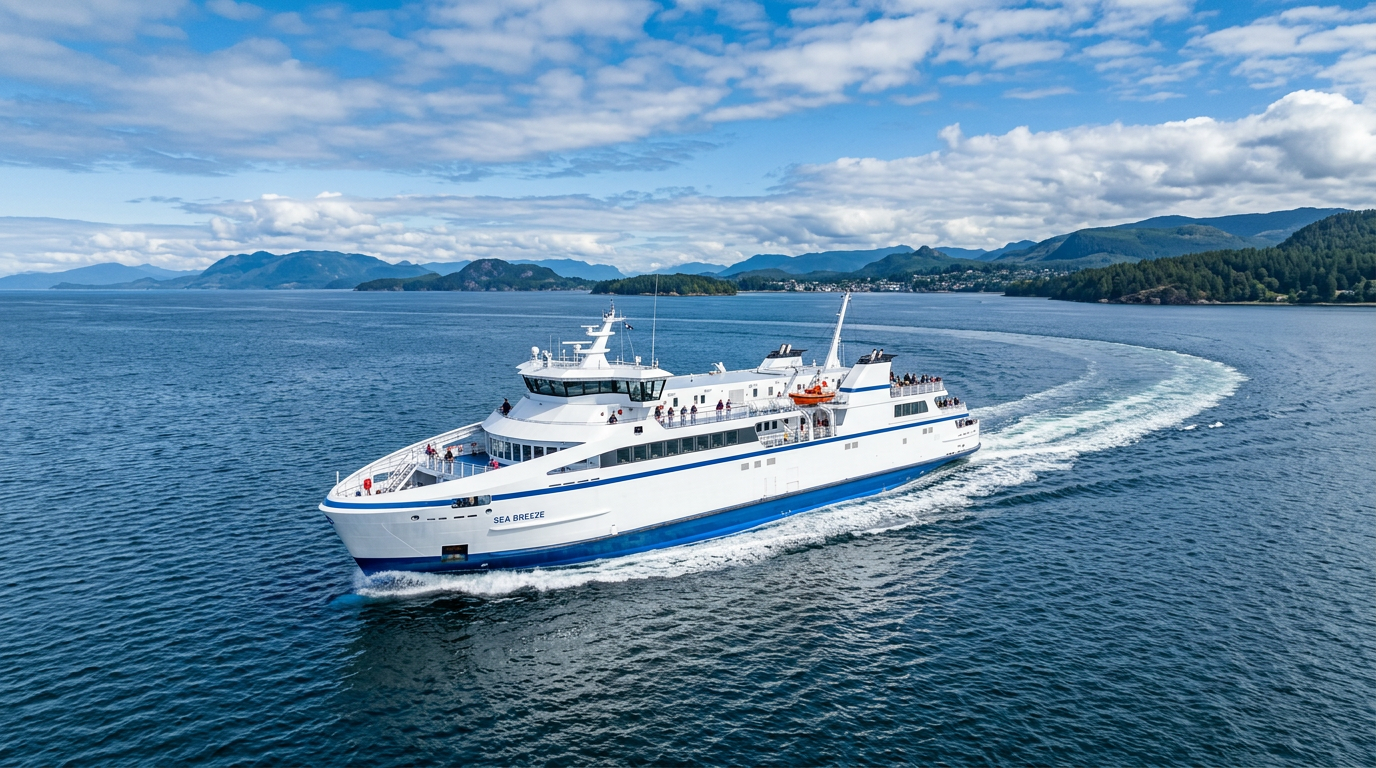
Choosing between the Harwich to Hook of Holland ferry and flying to Amsterdam depends entirely on your travel priorities. The ferry offers a relaxed, comfortable journey with the ability to take your car and unlimited luggage, while flying is significantly faster from door to door.
This guide provides a detailed comparison of Harwich to Hook of Holland vs flying to Amsterdam, covering all the key factors including total travel time, cost, comfort, and convenience to help you make the best decision for your trip to the Netherlands.
Key takeaways
- Choose the ferry for a relaxed journey, taking your car, or travelling with pets and lots of luggage.
- Flying is the faster option, with a total journey time of around 4-6 hours compared to the ferry’s 9-11 hours including check-in.
- The ferry can be more cost-effective for families or groups with a car, avoiding baggage fees and car rental costs.
- The Stena Line ferry from Harwich arrives at Hook of Holland, with easy metro and train connections to Amsterdam.
- Flying has a higher carbon footprint per passenger than travelling by ferry, especially when vehicle space is utilised.
Overall Comparison: Which is Better, Ferry or Flight?
Deciding between the ferry and a flight depends on your priorities: the ferry is best for a relaxed journey with a car and lots of luggage, while flying is the fastest option. The Stena Line ferry from Harwich provides an experience more akin to a mini-cruise, allowing you to avoid the stresses of airport security and enjoy onboard facilities. It’s ideal for families, those with pets, or anyone planning a longer road trip in Europe.
Flying, on the other hand, is built for speed. If your main goal is to get to Amsterdam as quickly as possible for a short city break and you are travelling light, then a flight from a London-area airport like Stansted or Heathrow is undoubtedly the more time-efficient choice. However, this speed comes at the cost of luggage restrictions, less personal space, and the general hassle of the airport experience.
Travel Time: What’s the Total Journey Duration?
Flying offers a shorter total journey time of 4-6 hours, whereas the ferry trip is a longer, more leisurely 9-11 hours, often overnight, including check-in and onward travel. While the flight itself is only about an hour, you must factor in travel to the airport, arriving 2-3 hours before departure for check-in and security, and then travel from Schiphol Airport to the city centre.
Ferry Journey Breakdown:
- Travel to Harwich Port: Varies by your UK starting point.
- Check-in: Arrive 60-90 minutes before departure.
- Crossing Time: Approximately 6.5 to 8 hours.
- Onward travel (Hook of Holland to Amsterdam): Around 1.5 hours.
- Total: Approximately 9-11 hours, but much of this can be spent sleeping on an overnight sailing.
Flight Journey Breakdown:
- Travel to UK Airport: Varies, but can be 1-2 hours for London airports.
- Check-in & Security: Recommended 2-3 hours before departure.
- Flight Time: Approximately 1 hour.
- Immigration & Baggage Claim: 30-60 minutes.
- Onward travel (Schiphol to Amsterdam): Around 15-20 minutes.
- Total: Approximately 4-6 hours.
Cost Analysis: Is It Cheaper to Fly or Get the Ferry?
The ferry can be more cost-effective for those travelling with a car or significant luggage, while flying may offer lower base fares for solo travellers with minimal baggage. Airline prices are notoriously volatile, with cheap seats available if booked far in advance, but last-minute fares can be very expensive. Critically, airline prices often exclude checked baggage, seat selection, and other extras.
The ferry price is more inclusive. While it might seem higher initially, it often includes your vehicle, and the luggage allowance is practically unlimited. For a family of four driving to a holiday in the Netherlands, the ferry almost always works out cheaper than four flight tickets plus the cost of a rental car and baggage fees. The choice in the Harwich to Hook of Holland vs flying to Amsterdam debate often comes down to what you need to bring with you.
Here’s a comparison of the typical cost factors:
| Feature | Stena Line Ferry (Harwich to Hook of Holland) | Flying (e.g., London Airport to Amsterdam) |
|---|---|---|
| Base Fare | ££-£££ (varies by season, vehicle) | £-£££ (varies by airline, booking time) |
| Car Onboard | Yes (additional cost) | Not possible |
| Checked Luggage | Very generous allowance included | Additional cost per bag, often high |
| Cabin/Seat | Cabin mandatory for overnight sailings | Standard cramped airline seat |
| Pet Travel | Yes (in-kennel or pet-friendly cabin) | Limited & expensive (usually in cargo hold) |
| Onward Travel | Metro & Train (modest cost) | Direct Train (relatively low cost) |
The Travel Experience: Comfort, Convenience & Onboard Facilities
The ferry provides a more comfortable and less stressful travel experience with private cabins and onboard amenities, compared to the more cramped and hurried nature of air travel. On the Stena Line ships sailing this route, you can book a private cabin (which is mandatory on overnight sailings) to rest, shower, and relax in privacy. You can walk around the ship, get fresh air on the deck, and enjoy facilities like restaurants, bars, a cinema, and shops.
In contrast, flying involves less comfortable seating with limited legroom. The process from start to finish is often stressful, involving queues for bag drop, security, and boarding. While the flight is short, the overall experience is one of being processed through a system rather than enjoying the journey.
Luggage, Cars, and Pets: What Can You Take With You?
The ferry is the clear winner for flexibility, allowing you to take your car, pets, and virtually unlimited luggage. If you are travelling with a vehicle, the ferry is your only direct option. This freedom allows you to pack everything you need without worrying about weight limits or extra fees, from camping gear to sports equipment. The process is simple, and if you’re new to it, our guide on taking a car on the Dover to Dunkirk ferry shares similar principles that can be helpful.
Travelling with pets is also far more straightforward and humane on the ferry. Stena Line offers pre-bookable onboard kennels or special pet-friendly cabins. Airlines, if they allow pets at all, typically require them to travel in the cargo hold, which can be a stressful and expensive experience for both pet and owner.
Environmental Impact: Which Option is Greener?
Ferry travel generally has a lower carbon footprint per passenger than flying, making it a more environmentally conscious choice for your journey to the Netherlands. While a large ship consumes a lot of fuel, it carries hundreds of passengers and vehicles, making the per-head emissions significantly lower than those of an aircraft. This is especially true when you travel with a group or family in a car, as you are utilising the ferry’s capacity efficiently. If environmental considerations are a key part of your Harwich to Hook of Holland vs flying to Amsterdam decision, the ferry is the stronger choice.
Getting to Amsterdam City Centre from Your Arrival Point
Both arrival points offer convenient public transport links, with direct trains from Schiphol Airport and a simple metro and train connection from the Hook of Holland ferry terminal. Upon disembarking the ferry at Hook of Holland (Hoek van Holland), the metro station Hoek van Holland Haven is located directly outside the terminal. From here, you can take a frequent metro service to Rotterdam or The Hague, where you can switch to an Intercity train that will take you to Amsterdam Centraal station. The total journey time is approximately 90 minutes.
From Amsterdam Airport Schiphol, the journey to the city centre is even quicker. The train station is located directly beneath the airport terminal, with direct trains running to Amsterdam Centraal every few minutes. The journey is fast and efficient, taking only about 15-20 minutes.
Related reading
Frequently Asked Questions
Is it cheaper to get the ferry or fly to Amsterdam?
It depends. Flying can have cheaper base fares for solo travellers, but the ferry often becomes more economical when you factor in the cost of taking a car, avoiding airline baggage fees, and travelling with pets. Groups and families usually find the ferry offers better value.
How long does the ferry from Harwich to Hook of Holland take?
The Stena Line ferry crossing takes approximately 6.5 to 8 hours. There are daytime and overnight sailings available, allowing you to combine your travel and accommodation, arriving refreshed in the morning and saving on the cost of a hotel room.
Is the ferry to Holland better than flying?
This is subjective. The ferry is better for a relaxed journey, no luggage limits, and the ability to take your car. Flying is superior if speed is your absolute priority and you are travelling with minimal luggage. Consider what matters most for your trip’s specific neeeds.
Can you get to Amsterdam easily from Hook of Holland?
Yes, it is very straightforward. The metro station is directly outside the ferry terminal. From there, you can travel to Rotterdam or The Hague and transfer to a frequent intercity train to Amsterdam Centraal. The entire journey takes around 90 minutes.
What is the luggage allowance on the Harwich ferry?
The luggage allowance is a major advantage of ferry travel. Foot passengers can bring what they can comfortably carry, and if you are travelling with a car, you can fill it with your belongings. This avoids the restrictive and expensive baggage policies common with airlines.
Is the overnight ferry to Holland worth it?
The overnight ferry is an excellent and popular option. It effectively combines your transport and accommodation for one night, saving you the cost of a hotel. You can sleep in a private cabin and wake up in the Netherlands, ready to start your day.