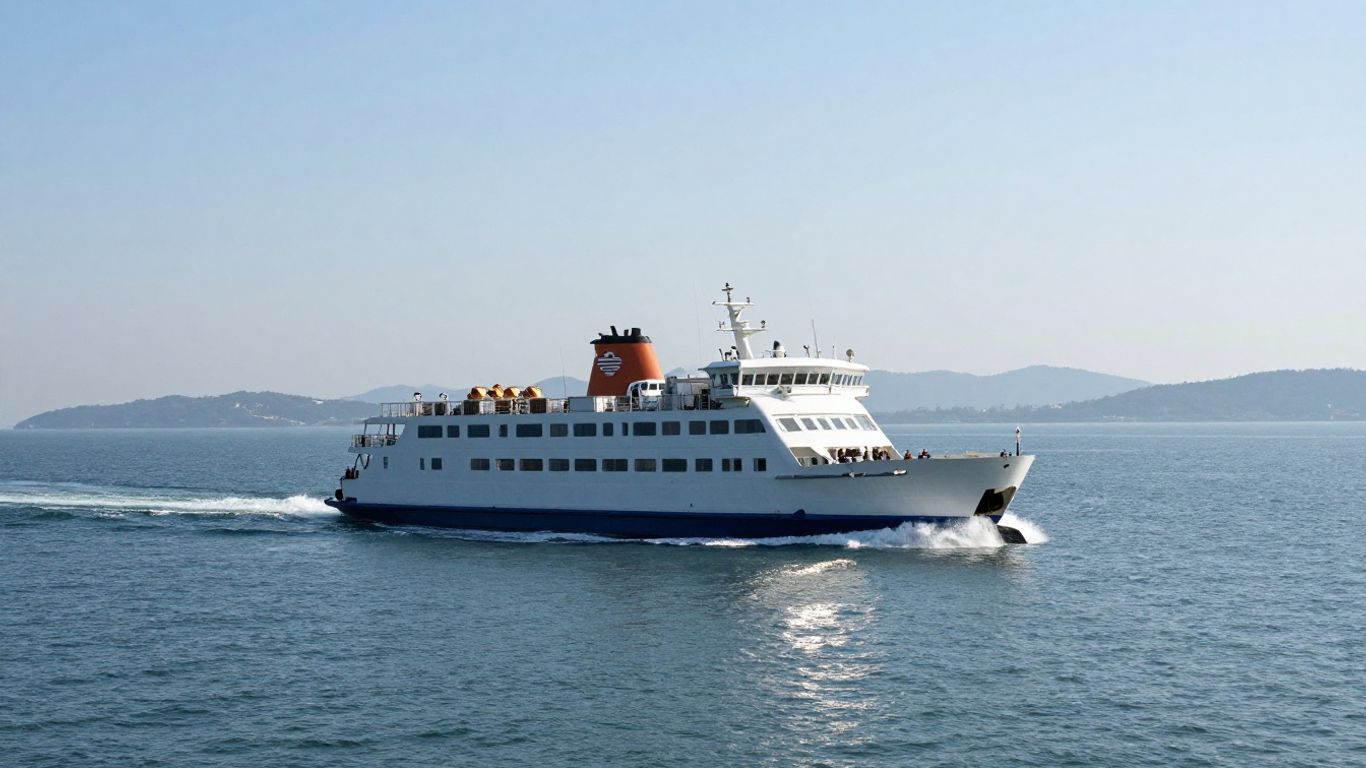
Ever wondered how fast a ferry actually goes? It’s not as simple as you might think. We hop on these boats all the time, especially for island trips or just crossing a bay, but their speed really depends on a few things. Let’s take a look at what makes a ferry tick and how quickly you can expect to get from A to B.
Key Takeaways
- The speed of a ferry is influenced by its hull shape, engine power, and even the weather.
- Different types of ferries travel at different speeds; commuter ferries are often quicker than large, overnight ones.
- Travel time isn’t just about speed; distance, sea conditions, and how long it takes to load and unload all play a part.
- Ferries generally travel slower than speedboats but faster than many large cargo ships.
- Ferry operators try to balance how fast they go with how much fuel they use to make journeys efficient.
Understanding Ferry Speed: What Determines How Fast Does A Ferry Go?
So, you’re wondering about ferry speeds, right? It’s not as simple as just saying ‘ferries go this fast’. Lots of things play a part in how quickly a ferry can chug along. The actual speed of a ferry is a mix of its design, how it’s powered, and even the weather. Let’s break down what makes a ferry tick.
Hull Design And Ferry Type
The shape of a ferry’s hull is a big deal. Think of it like the bottom of a boat. A sleek, sharp hull cuts through the water more easily than a flat, wide one. This is why you see different shapes for different jobs. Catamarans, with their two hulls, are often faster because they lift out of the water a bit, reducing drag. Traditional ferries might have a single, deeper hull designed for stability and carrying lots of weight, which usually means they’re not built for speed. The type of ferry really dictates its potential speed; a small passenger ferry zipping between islands will be designed very differently from a massive car ferry crossing a channel.
Engine Power And Propulsion Systems
Obviously, the engine is key. More powerful engines mean more oomph to push the ferry through the water. But it’s not just about raw power; it’s also about how that power is used. Ferries can have different types of engines, like diesel or gas turbines, and different ways of pushing water, such as propellers or water jets. Water jets, for instance, are common on faster ferries because they can provide a lot of thrust. The efficiency of the propulsion system matters too – how well it converts engine power into forward motion. It’s a bit like comparing a sports car engine to a truck engine; both are powerful, but they’re built for different purposes.
Environmental Factors Affecting Speed
Even the fastest ferry can be slowed down by Mother Nature. The sea state, meaning how rough the water is, is a major factor. Big waves can really pound against the hull, slowing the ferry down and making the ride uncomfortable. Strong winds can also act like a brake, especially if the ferry has a large surface area above the waterline. Currents can either help or hinder a ferry’s progress, depending on the direction. So, while the ferry itself has a top speed, the actual speed you experience on a journey can vary quite a bit based on these conditions. It’s why ferry schedules often have a bit of wiggle room built in.
The design of a ferry, from its underwater shape to the engines driving it, is a careful balance. Engineers have to consider not just how fast it can go, but also how much fuel it will use, how stable it needs to be, and what kind of cargo it will carry. Speed is just one piece of a much bigger puzzle.
These factors all combine to determine how fast a ferry actually travels. It’s a complex interplay, and understanding it helps explain why some ferries are quick commuters while others are more like floating hotels. The vessel design and operating conditions are really at the heart of it all.
Typical Ferry Speeds Across Different Routes
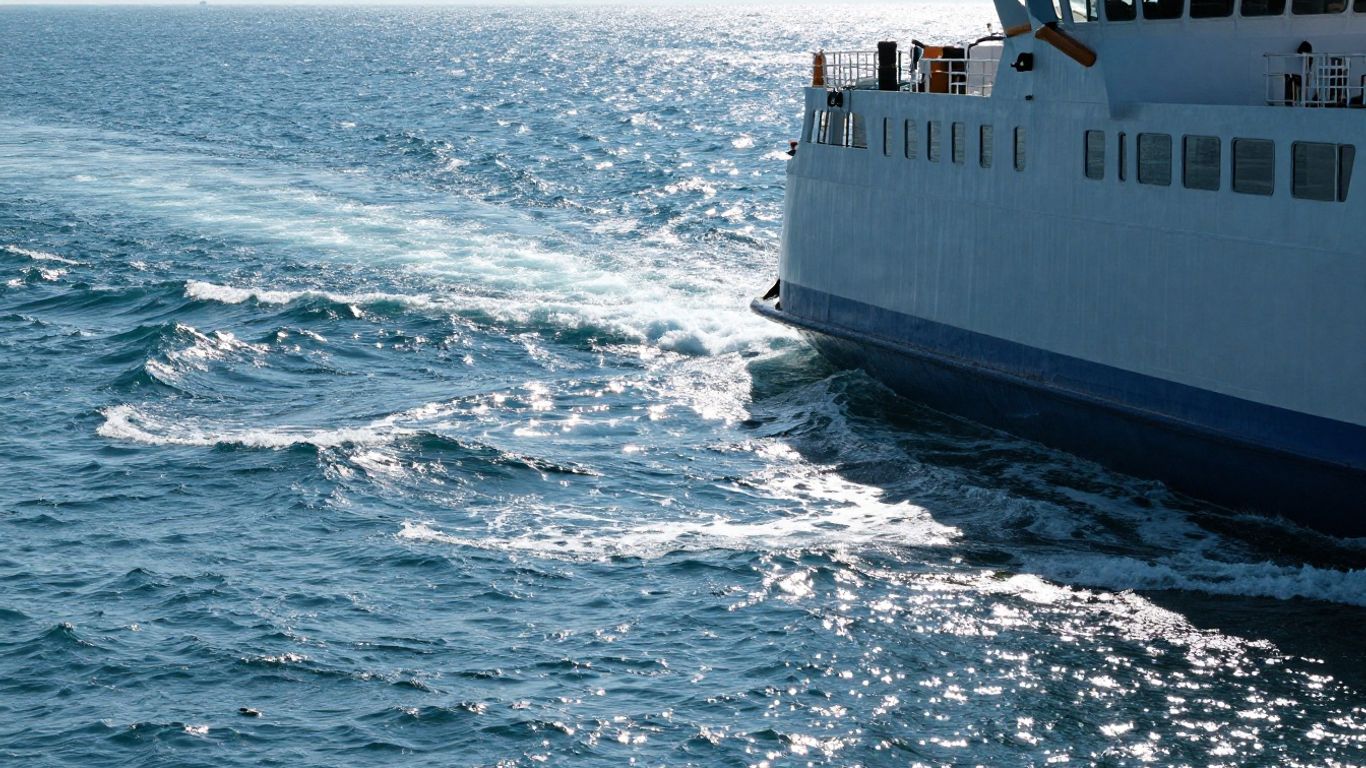
So, how fast do these floating buses actually go? Well, it really depends on what they’re built for. You wouldn’t expect a little commuter boat zipping across a harbour to keep pace with a big ship crossing an ocean, right?
Short-Distance Commuter Ferries
These are the workhorses of daily travel for many. Think of the ferries that shuttle people across a bay or a river, like the ones in Sydney or San Francisco. Their main job is to get people from A to B quickly and reliably, often multiple times a day. Because the distances are short, they don’t need to be speed demons. Their top speeds are usually in the 10-20 knot range. This allows for smooth stops and starts, and it’s plenty fast enough for journeys that might only take 10-30 minutes. They’re designed for frequent departures and arrivals, so efficiency in docking and passenger flow is more important than raw speed.
Medium-Distance Inter-Island Ferries
These ferries connect islands or coastal towns, covering distances that take a bit longer, maybe an hour or two. They often carry a mix of passengers, cars, and sometimes even lorries. To make these journeys practical, they need to be a bit quicker than the commuter types. You’ll typically see these ferries cruising at speeds between 15-25 knots. This speed strikes a good balance between getting people to their destination without too much delay and managing fuel costs for longer trips. They might have more onboard facilities, like a small cafe, as passengers are on board for a longer stretch.
Long-Distance Overnight Ferries
Now, these are a different beast altogether. Ferries that cross larger bodies of water, often overnight, are less about speed and more about comfort and capacity. Think of routes like those in the Baltic Sea or across the Irish Sea. Speed isn’t the priority here; it’s about providing a comfortable journey where passengers can sleep, eat, and relax. Their speeds are generally the slowest, often in the 12-20 knot range. The focus is on stability, carrying capacity, and making the journey part of the experience, rather than a race against time. Booking these in advance can often get you better prices, especially if you plan for midweek or off-peak sailings.
It’s interesting to note that while some ferries are built for speed, many prioritise a steady pace that balances fuel use with passenger comfort and the practicalities of frequent stops. The type of route dictates the design and, consequently, the typical speed you’ll experience.
Factors Influencing Ferry Travel Times
So, you’ve picked your ferry, and you’re wondering how long the trip will actually take. It’s not just about the distance, though that’s a big part of it. A lot of things can nudge that estimated arrival time around, sometimes quite a bit. The actual time spent on the water is a mix of planned speed and a whole bunch of real-world variables.
Distance Of The Journey
This one seems obvious, right? Longer routes naturally take more time. But it’s not always a straight line. Some ferry routes are designed to connect specific points, even if it means a slightly longer, more direct path over open water, rather than hugging a coastline. Think about the difference between a quick hop across a river and a journey between islands. The sheer miles covered make a huge difference.
Weather Conditions And Sea State
This is where things can get unpredictable. Rough seas can really slow a ferry down. If the waves are big, the captain might have to reduce speed for safety and passenger comfort. Strong headwinds can also act like a giant brake. On the flip side, a calm sea with a favourable current can sometimes help a ferry make up a little time. It’s why ferry operators keep a close eye on the weather forecast.
Loading And Unloading Procedures
This is a big one, especially for ferries that carry vehicles. Getting cars, lorries, and passengers on and off takes time. It’s a carefully choreographed dance. The size of the ferry, the number of vehicles, and how organised the port is all play a part. Some ports are super efficient, while others can be a bit of a bottleneck. This is particularly true for busy routes like Dover to Calais, where lots of cars and lorries need to get on board quickly.
Even on a short trip, the time spent in port, waiting for the ramp to lower, or for passengers to disembark, can add a significant chunk to your overall travel duration. It’s not just about the time the engines are running.
Here’s a rough idea of how these factors might play out:
- Short hops (e.g., river crossings): Primarily influenced by loading/unloading. Weather has less impact.
- Medium routes (e.g., inter-island): Distance becomes more significant, but weather can cause noticeable delays.
- Longer crossings (e.g., overnight): Distance is the main factor, but weather can still impact speed and comfort, potentially affecting arrival times.
It’s always a good idea to factor in a little buffer time for your journey, just in case.
Comparing Ferry Speeds To Other Maritime Vessels
So, how do ferries stack up against other boats out on the water? It’s a good question, especially when you’re trying to figure out the best way to get from A to B. Ferries are designed for a specific job, and their speed reflects that.
Speed of High-Speed Craft
When we talk about speed on the water, some vessels are built purely for it. Think of those sleek, modern catamarans or hydrofoils. These are often called high-speed craft, and they can really move. They’re built with lightweight materials and powerful engines to slice through the waves. Some of these can hit speeds well over 30 knots, sometimes even pushing 40 knots. They’re great for shorter hops where getting there quickly is the main goal, like crossing a bay or a narrow strait. They’re not usually the ones you’d take for a long haul, though.
Speed of Traditional Cargo Ships
Now, let’s look at the workhorses of the sea: cargo ships. These giants are all about carrying loads, not breaking speed records. Their hulls are designed for stability and maximum capacity. Because of this, they tend to move at a much more leisurely pace. Most large cargo vessels chug along at around 15 to 20 knots. It’s a steady speed, good for covering long distances with huge amounts of goods, but definitely not what you’d call fast. If you’re waiting for a package from overseas, this is the kind of speed your goods are likely travelling at.
Speed of Cruise Liners
Cruise liners are a bit of a middle ground, but lean more towards comfort and amenities than raw speed. They’re massive floating hotels, designed to carry thousands of passengers on holiday. While they can move at a decent clip, their top speeds are usually around 20 to 25 knots. The focus is on a smooth, enjoyable journey, not on getting to the next port in record time. They often have set schedules that allow for plenty of time in each destination, so a few extra hours at sea isn’t usually a problem. It’s a different kind of travel experience altogether.
It’s interesting to see how different types of vessels are optimised for their purpose. A ferry’s speed is a balance between getting people to their destination reasonably quickly and doing so efficiently, whereas a cargo ship prioritises capacity and a cruise liner focuses on passenger comfort and experience.
Here’s a quick look at how they generally compare:
- Ferries: 15-30 knots (depending on type and route)
- High-Speed Craft: 30-40+ knots
- Cargo Ships: 15-20 knots
- Cruise Liners: 20-25 knots
So, while a ferry might not be as fast as a dedicated high-speed craft, it’s often quicker than a cargo ship and serves a very different purpose than a cruise liner. For many routes, like the popular Dover to Calais crossing, ferries offer a practical and efficient way to travel.
Maximising Efficiency: How Fast Does A Ferry Go For Optimal Journeys?
So, we’ve talked about how fast ferries can go, but what about how fast they should go? It’s not always about hitting top speed. For ferry operators, finding that sweet spot between speed and cost is a constant balancing act. The goal is to get passengers and cargo from A to B reliably, without breaking the bank or the environment.
Balancing Speed and Fuel Consumption
This is where things get interesting. Going faster uses a lot more fuel, and fuel isn’t cheap. Think about it: pushing a big boat through the water creates drag, and the faster you go, the more that drag fights back. Operators look at data to figure out the most economical speed. This isn’t just about saving money; it’s also about reducing emissions. A slower, steady pace often means much better fuel per nautical mile [1ea0].
Here’s a rough idea of how speed impacts fuel use:
- Low Speed (e.g., 10-15 knots): Generally the most fuel-efficient, but takes longer.
- Medium Speed (e.g., 18-25 knots): A common compromise, balancing travel time with fuel costs.
- High Speed (e.g., 30+ knots): Uses significantly more fuel, often reserved for specific services or when time is critical.
Route Planning For Shorter Travel Times
It’s not just about the boat’s speed, but also how smartly the route is planned. Sometimes, a slightly longer route that avoids rough seas or strong currents can actually be quicker overall and use less fuel. Good route planning takes into account:
- Current weather forecasts.
- Tidal information.
- Known shipping lanes and traffic.
- The ferry’s specific performance characteristics.
Smart planning can shave minutes, or even hours, off a journey, making the whole trip more efficient. It’s about working with the sea, not just against it.
Technological Advancements In Ferry Design
Ferry design is always evolving. New hull shapes are being developed that create less drag, meaning they can go faster with the same amount of power, or use less power to maintain the same speed. Some modern ferries use advanced propulsion systems that are more efficient than older ones. Even things like lightweight materials in construction play a part. It’s a continuous effort to make these vessels more economical and better for the environment. For example, some operators are looking into hybrid or fully electric ferries, which could drastically change the efficiency equation for shorter routes, much like electric cars have changed personal transport. Checking in for a ferry, for instance, has also become more streamlined with digital ticketing, saving time for both passengers and staff [e276].
Finding the optimal speed for a ferry is a complex calculation. It involves weighing the cost of fuel against the value of passengers’ time, while also considering the environmental impact. It’s a dynamic process, constantly adjusted based on real-time conditions and economic factors.
So, How Fast is That Ferry?
Right then, we’ve had a look at ferry speeds, and as you can see, it’s not a simple ‘this fast’ answer. It really depends on the type of ferry, where it’s going, and even the weather. From the slow, steady chug of a car ferry to the zippy pace of a fast passenger catamaran, there’s a whole range out there. So next time you’re waiting at the terminal, you’ll have a better idea of what to expect speed-wise. It’s all about balancing how quickly you want to get there with the practicalities of the journey. Happy travels!
Frequently Asked Questions
How fast do ferries usually travel?
Most ferries aren’t speed demons! They typically chug along at speeds between 10 to 25 knots, which is about 11 to 29 miles per hour. Some super-speedy ones can go faster, but the average ferry is more about a steady pace.
What makes one ferry faster than another?
A few things! The shape of the boat’s bottom (its hull) makes a big difference. Also, how powerful the engines are and the type of propellers they use play a part. Think of it like comparing a sleek sports car to a sturdy lorry – they’re built for different jobs.
Do ferries always travel at the same speed?
Nope! The speed can change quite a bit. If the sea is rough or there’s a strong headwind, the ferry will likely slow down to be safe. Also, when they’re busy loading or unloading cars and people, they’ll be going very slowly or not at all.
Are ferries slower than other boats?
Generally, yes. Compared to speedy little boats or even some faster ships like those used for racing, ferries are often slower. They’re designed to carry lots of passengers and vehicles, so comfort and capacity are usually more important than sheer speed.
How does the weather affect ferry speed?
Bad weather is a ferry’s enemy when it comes to speed! Big waves and strong winds can really slow a ferry down. For safety, the captain will often reduce speed if the conditions aren’t good, making the journey take longer.
Can ferries go faster if they try?
They can, but it costs a lot more! Going faster uses up much more fuel, which is expensive. Ferry companies usually try to find a balance between getting passengers there in a reasonable time and not spending a fortune on fuel. Sometimes, special fast ferries are used for shorter routes where speed is more important.