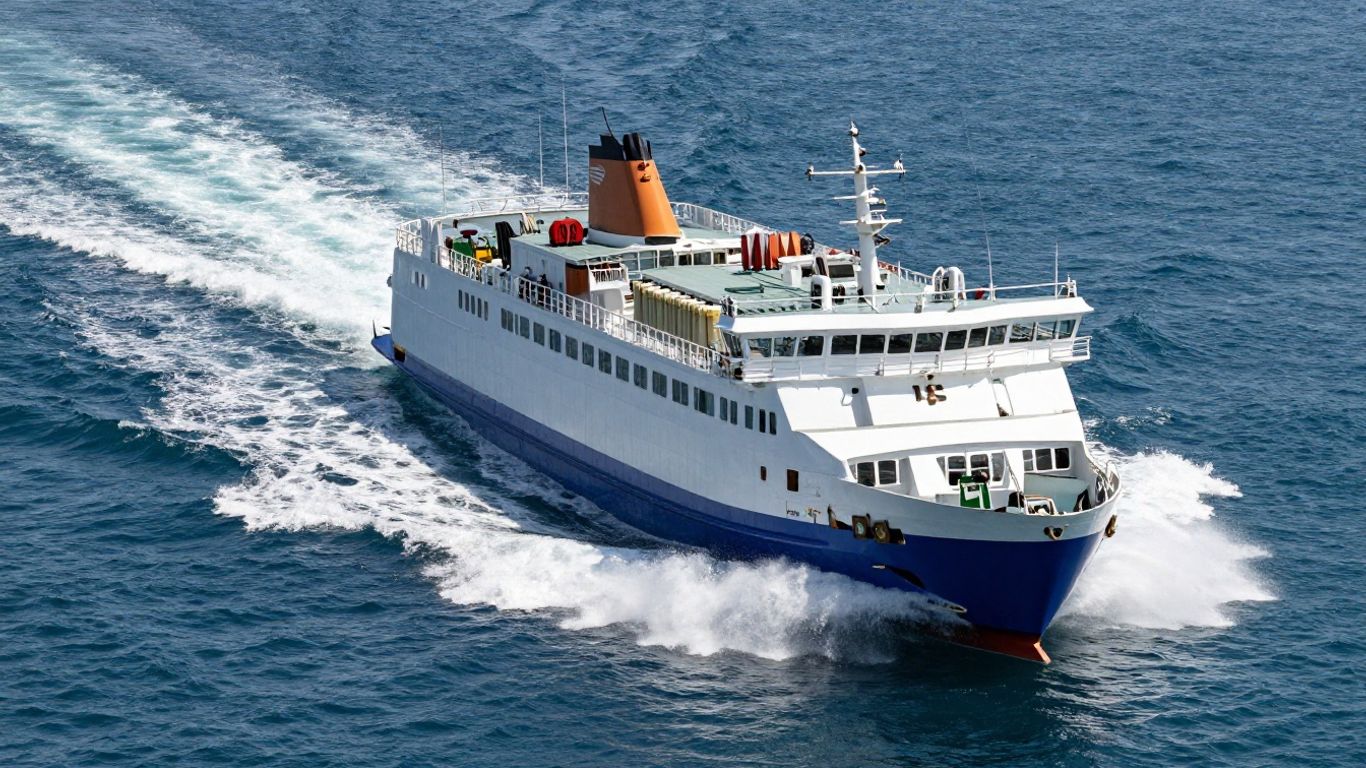
Ever wondered how fast those ferries actually zip across the water? It’s not as simple as just pointing them in the right direction and hitting the gas. Lots of things play a part in how fast a ferry goes, from the type of boat it is to the weather outside. We’re going to break down what makes a ferry tick and how quickly it can get you from A to B. So, if you’ve ever been curious about ferry speeds, stick around.
Key Takeaways
- The speed of a ferry isn’t fixed; it depends on many factors. Think about the boat’s size, its shape, and how much power it has.
- Different ferries are built for different jobs. Car ferries might be slower because they carry a lot of weight, while passenger ferries often prioritise getting people there on time.
- High-speed ferries exist, but they use more fuel and can’t handle rough seas as well.
- The sea itself can slow a ferry down. Big waves, strong currents, and even shallow water can make a ferry go slower than it normally would.
- How a ferry is used also matters. A ferry on a short trip with tight schedules might go faster than one on a long journey where saving fuel is more important.
Understanding How Fast Does A Ferry Go
So, you’re wondering about ferry speeds, eh? It’s not quite as simple as saying ‘they go this fast’. A ferry’s pace is a bit of a mixed bag, influenced by a whole bunch of things. The speed isn’t just about getting from A to B; it’s about doing it safely, efficiently, and often, on a tight schedule. Think about it – you wouldn’t expect a massive car ferry carrying hundreds of vehicles to zip around like a small speedboat, would you? They’re built for different jobs.
Factors Influencing Ferry Speed
Lots of bits and pieces affect how quickly a ferry can chug along. It’s not just one thing, but a combination.
- Size and Weight: Bigger, heavier ferries generally move slower. They need more power to get going and keep moving.
- Purpose: Is it a short hop across a river or a longer journey between islands? The intended route plays a big part.
- Engine Power: Pretty obvious, really. A more powerful engine means more oomph to push the ferry through the water.
- Hull Design: The shape of the boat’s bottom makes a huge difference to how easily it cuts through the waves.
The water itself can be a bit of a hurdle. Drag from the water pushing against the hull is a major factor. Anything that increases this drag, like a rougher sea or a hull that isn’t designed for speed, will slow the ferry down.
Typical Ferry Speed Ranges
When we talk about ferry speeds, it’s a wide spectrum. You’ve got your slower, workhorse vessels and then the speedy ones designed for quick commutes. For many standard car and passenger ferries, you’re looking at speeds somewhere in the region of 10 to 20 knots (that’s about 11 to 23 miles per hour). These are the workhorses, the ones you see connecting cities and islands day in and day out. They prioritise carrying capacity and reliability over breakneck speed. Then you have the high-speed craft, which can easily hit 30 to 40 knots (around 35 to 46 miles per hour) or even more. These are often smaller, lighter, and built with different technology to cut through the water faster. It’s a bit like comparing a lorry to a sports car – both are vehicles, but they’re designed for very different purposes and speeds.
Different Types Of Ferries And Their Speeds
Not all ferries are built the same, and this really shows when you look at how fast they can go. Think about it – a big boat carrying cars and lorries across a wide stretch of water has different needs than a speedy little vessel zipping commuters between islands. The type of ferry really dictates its purpose, and that, in turn, affects its speed.
Car Ferries: Balancing Capacity And Velocity
These are the workhorses of the ferry world, often seen on routes where people need to take their vehicles. They’re designed to carry a lot, both people and cars, which means they tend to be larger and heavier. Because of this, they usually aren’t the fastest things on the water. Their main job is getting lots of stuff from A to B safely and efficiently, not breaking speed records. Their typical cruising speeds often sit between 15 to 25 knots. This allows for a good balance between making decent time and handling the weight of all those vehicles and passengers. You’ll find these on longer crossings or where vehicle capacity is a big deal, like many RoPax routes.
Passenger Ferries: Prioritising Punctuality
When you’re just hopping on a ferry to get to work or visit a nearby island, speed is often more about being on time than anything else. Passenger ferries, especially those on shorter, more frequent routes, are built to be nimble. They might not carry cars, but they need to get a lot of people on and off quickly. This means they can often be a bit quicker than their car-carrying cousins. Think of the ferries that shuttle people between city centres and islands – they need to stick to a timetable. Their speeds can vary, but you might see them hitting anywhere from 20 to 30 knots, sometimes a bit more if they’re designed for it. It’s all about getting you there without too much fuss.
High-Speed Ferries: The Need For Speed
Then you have the ferries that are all about going fast. These are often catamarans or other lightweight designs built specifically to cut down on drag and get up to speed. They’re used on routes where time is really of the essence, or where the distance is just a bit too far for a slower ferry to be practical. You’ll see these on longer commuter routes or between popular tourist destinations. They can really move, often clocking speeds of 35 knots and upwards, with some even pushing past 40 knots. It’s a different kind of ferry experience altogether, focusing on getting you there in a hurry.
The design of a ferry plays a massive role in its speed. A sleek, lightweight hull will naturally move through the water faster than a bulky, heavy one, even with the same engine power. It’s a bit like comparing a sports car to a van – both have engines, but their purpose and design lead to very different performance.
The Impact Of Ferry Design On How Fast Does A Ferry Go
So, how fast does a ferry actually go? Well, a big part of the answer lies in how it’s built. It’s not just about slapping an engine on a boat; there’s a whole lot of science and engineering that goes into making a ferry move efficiently through the water. The shape of the hull is probably the most significant factor. Think of it like trying to run through water yourself – a streamlined body moves much easier than a bulky one. The same applies to ferries.
Hull Shape And Its Effect On Resistance
Different hull shapes are designed for different jobs. A wide, flat hull might be stable and good for carrying lots of cars, but it creates a lot of drag, slowing the ferry down. On the other hand, a narrower, deeper hull, often seen on faster passenger ferries, cuts through the water more easily. This reduces the resistance the hull faces, meaning less power is needed to achieve a certain speed. It’s a bit like the difference between a speedboat and a barge. Some designs even use special features like hydrofoils or air lubrication systems to lift the hull partly out of the water at speed, drastically cutting down on drag and improving fuel efficiency.
Engine Power And Propulsion Systems
Of course, you can’t talk about speed without mentioning the engine. The sheer power of the engines is a direct contributor to how fast a ferry can go. But it’s not just about raw horsepower; the type of propulsion system matters too. Propellers are common, but some modern ferries use water jets, which can be more efficient at higher speeds and offer better manoeuvrability. The size and number of engines are carefully chosen based on the ferry’s intended use and the speeds it needs to achieve. A ferry designed for short, frequent hops might have less powerful engines than one making longer, faster crossings.
Ferry Size And Displacement Considerations
Bigger isn’t always faster, especially when it comes to water. A larger ferry, with more weight (displacement), requires more power to get moving and keep moving at speed. Imagine trying to push a small shopping trolley versus a large industrial cart – the heavier one takes more effort. Naval architects have to carefully balance the need for capacity (how many cars or passengers it can carry) with the desire for speed. Larger vessels generally have lower top speeds compared to smaller, lighter ones, all else being equal. This is why you often see smaller, dedicated passenger ferries being quicker than the massive car and passenger ferries that cross wider stretches of water. The whole process of designing ferries is a balancing act.
The relationship between a ferry’s size, its weight, and the power needed to move it is a constant consideration. A heavier boat needs more oomph to overcome inertia and water resistance. This means that for a given engine size, a lighter ferry will almost always be faster than a heavier one.
External Elements Affecting Ferry Velocity
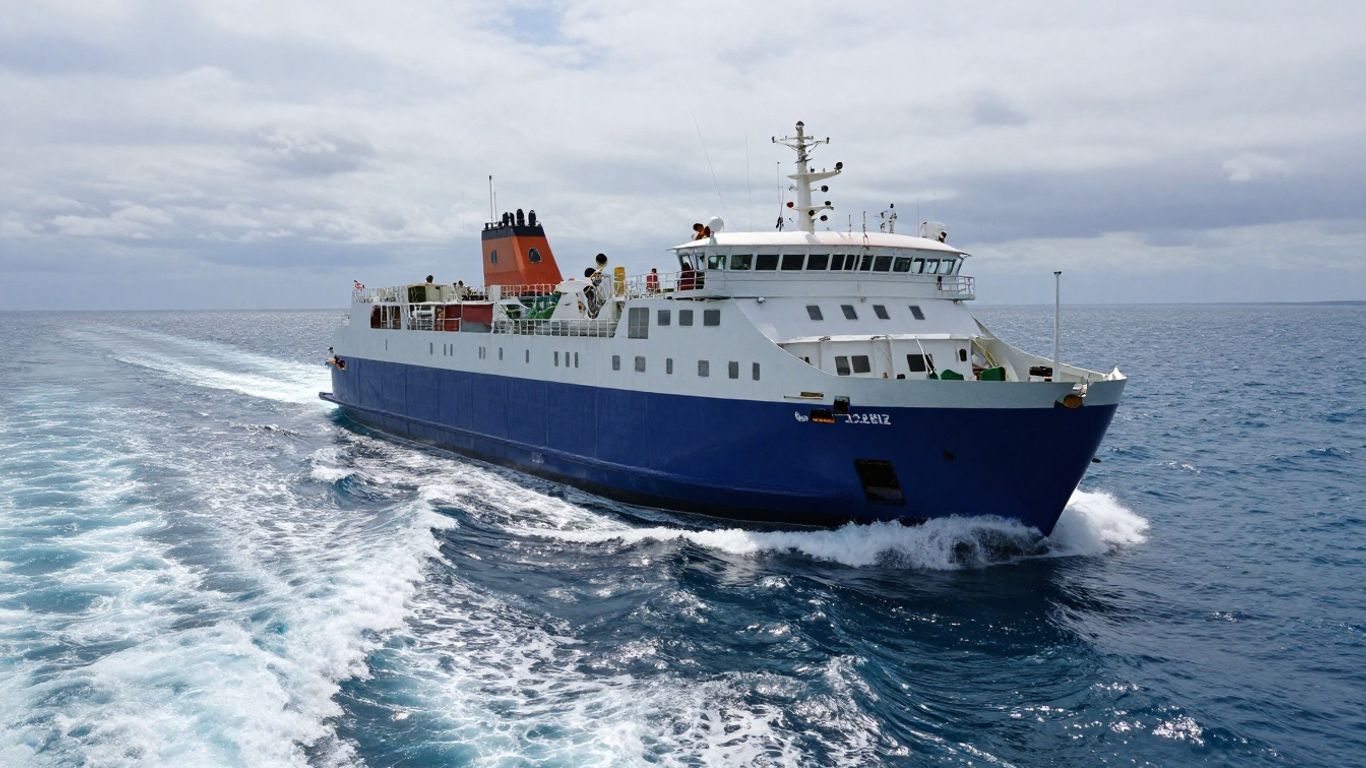
Right, so we’ve talked about the ferry itself, but what about what’s going on around it? Turns out, the big blue (or sometimes grey!) sea isn’t always a flat, calm highway. Lots of things outside the ferry’s control can really mess with its speed.
Weather Conditions and Sea State
This is a big one. You know how a strong headwind can slow you down when you’re cycling? It’s kind of like that, but on a much bigger scale. Rough seas, with big waves and strong winds, mean the ferry has to slow right down. It’s not just about comfort; it’s about safety. Trying to push through a storm at full tilt is a recipe for disaster. Ferry operators have to keep a close eye on the weather forecasts to make sure they’re not taking unnecessary risks. Sometimes, they even have to cancel services altogether if it’s too nasty out there.
Here’s a rough idea of how sea conditions can affect things:
- Calm Seas (Beaufort Scale 0-2): Minimal impact. Ferries can generally maintain their optimal speeds.
- Moderate Seas (Beaufort Scale 3-4): Slight reduction in speed might be needed, especially against the wind.
- Rough Seas (Beaufort Scale 5-7): Significant speed reduction is usually necessary for safety and to avoid damage.
- Very Rough Seas (Beaufort Scale 8+): Services likely suspended or severely delayed.
Tidal Streams and Currents
Think of currents like underwater rivers. If the ferry is trying to go one way, but the current is pushing it another, it’s going to take more effort and time to get where it’s going. This is especially true in coastal areas or estuaries where tides can be quite strong. A strong tidal stream running against the ferry’s direction of travel can really chop off a few knots from its effective speed. Conversely, if the current is helping, the ferry might actually arrive a bit early, though operators usually plan for the worst-case scenario. Understanding these hydro-meteorological conditions is key for planning reliable schedules.
Water Depth and Navigation Channels
Ferries, especially the larger ones, need a certain amount of water under their hull to float safely. If the water gets too shallow, they have to slow down to avoid hitting the bottom. This is why ferries stick to marked navigation channels, which are kept deep enough for safe passage. In areas with less predictable depths, or where dredging hasn’t been done recently, a ferry captain will be extra cautious and reduce speed. It’s all about not getting stuck or damaging the boat.
The sea is a powerful force, and while modern ferries are robust, they are still subject to the whims of nature. Ignoring these external factors isn’t just bad planning; it’s dangerous. Operators must constantly adapt their plans based on real-time conditions to keep passengers safe and services running as smoothly as possible.
Operational Factors In Ferry Speed
Right then, let’s chat about what makes a ferry tick along at its particular pace. It’s not just about the engine size or the shape of the boat, you know. Loads of things behind the scenes, how the ferry company actually runs things, play a big part in how fast you’ll get from A to B.
Route Length and Schedule Demands
Think about it: a short hop across a river is going to be a different story speed-wise than a long haul to an island. Shorter routes often mean the ferry can afford to go a bit quicker, as it doesn’t need to conserve fuel for hours on end. Plus, if you’ve got a tight schedule to stick to, especially with commuter ferries, they’ll be pushing it to make sure you get to work on time. The pressure to meet tight schedules can sometimes mean running at higher speeds than ideal. For longer routes, though, it’s a different ballgame. They might cruise at a more moderate pace to save on fuel costs, which can add up pretty quickly over many miles. It’s a balancing act, really.
Loading and Unloading Times
This is a big one that people often forget. Even if a ferry can go really fast, it doesn’t help much if it’s sitting in port for ages. The time it takes to get cars, lorries, and passengers on and off the boat eats into the overall journey time. If a ferry is constantly waiting around, its average speed for the whole trip will look much lower, even if it was zipping along on the open water. Some modern ferries have clever systems to speed this up, but it’s still a significant chunk of the operation.
Fuel Efficiency Versus Speed Trade-offs
Here’s where things get interesting. Going faster almost always means using more fuel. It’s like driving your car – put your foot down, and the fuel gauge drops faster. Ferry operators have to make a choice here. Do they want to get you there as quickly as possible, costing more in fuel? Or do they want to save money on fuel by going a bit slower? This decision often depends on the type of ferry, the route, and what the passengers or cargo owners are willing to pay for. Some companies are really looking into this, trying to find that sweet spot where they can save money on fuel without making the journey too long. For instance, one ferry owner partnered with a company to look at their fuel use and found they could cut down consumption by about 20% just by tweaking their speed and considering the weather. This kind of optimisation is becoming more common.
The decision on how fast a ferry travels isn’t just about the boat itself. It’s a complex calculation involving the route, the need to be on time, and the ever-present cost of fuel. Operators are constantly weighing these factors to find the best compromise for their business and their passengers.
Comparing Ferry Speeds To Other Vessels
So, how do ferries stack up against other boats you might see out on the water? It’s a bit like comparing apples and oranges sometimes, as different vessels have totally different jobs to do. A ferry’s speed is usually a careful balance between getting people or cars from A to B reasonably quickly and doing it economically.
Ferries Versus Cruise Ships
When you think about cruise ships, you probably picture them gliding majestically across the ocean, right? Well, they’re not exactly built for speed. Their main goal is comfort and carrying a lot of people for a long time, not zipping across a channel. A typical large ferry might do 20-30 knots, while a cruise ship often cruises at a much more relaxed 15-20 knots. It’s a trade-off, really; the cruise ship brings a larger volume of passengers and amenities, but the ferry gets you to your destination faster.
- Speed: Ferries are generally faster than cruise ships.
- Purpose: Ferries focus on transport between points; cruise ships focus on the journey experience.
- Capacity: Cruise ships carry far more passengers and have more facilities.
Ferries Versus Cargo Ships
Cargo ships are another story entirely. These are the workhorses of the sea, designed to haul massive amounts of goods. Speed isn’t their top priority; it’s all about efficiency and capacity. They often travel at speeds similar to or even slower than cruise ships, maybe 12-18 knots. This slow pace helps save a ton of fuel on long hauls. A ferry, on the other hand, needs to be quicker to make its routes viable and keep passengers happy.
Ferries Versus Smaller Boats
Now, if you compare a ferry to something like a speedboat or a small private yacht, the ferry might seem a bit slow. Speedboats can easily hit 40-60 knots or more! But remember, these smaller craft can’t carry anywhere near the number of people or vehicles a ferry can. They’re built for different purposes – thrill-seeking or short, fast trips for a few people. A ferry is designed for mass transit, and that requires a different set of priorities than just raw speed.
The speed of any vessel is dictated by its intended use. A ferry needs to be quick enough to be practical for commuters or travellers, but not so fast that it becomes uneconomical or uncomfortable. It’s a compromise that’s different for every type of boat on the water.
So, How Fast Are We Talking?
Right then, we’ve had a look at ferry speeds, and hopefully, it’s a bit clearer now. It’s not just one simple answer, is it? You’ve got your slow, steady haulers and then your speedy catamarans zipping across the water. The type of ferry, the route, the weather – it all plays a part. So next time you’re waiting at the terminal, you’ll have a better idea of what to expect speed-wise. It’s a bit like guessing how long a bus journey will take; there are always a few things that can change things up. But generally, they get you there, and that’s the main thing, isn’t it?
Frequently Asked Questions
How fast do most ferries travel?
Most ferries aren’t speed demons! They typically chug along at speeds between 10 to 25 knots. Think of it like a brisk walk for a boat. Some special ones can go much faster, though.
Does the weather make ferries go slower?
Absolutely! Big waves and strong winds are like hitting a wall for a ferry. They have to slow down a lot to keep everyone safe and stop the boat from getting tossed around too much. It’s like trying to run in a hurricane!
Are all ferries the same speed?
Not at all. There are different types of ferries. Big ones carrying cars and lots of people usually go a bit slower to be steady. Smaller, speedy ones designed just for passengers can zip across the water much quicker.
What’s a ‘knot’ when talking about boat speed?
A knot is just a special way to measure speed on water. One knot is the same as one nautical mile per hour. It’s a bit like how we use miles per hour on land, but for the sea!
Can a ferry’s shape make it go faster?
Yes, definitely! A ferry’s hull, which is the bottom part that sits in the water, is designed carefully. Some shapes cut through the water more easily, reducing drag and allowing the ferry to move faster with the same engine power.
Why don’t all ferries just go as fast as possible?
It’s a balancing act. Going super fast uses a lot more fuel, which costs a fortune and isn’t great for the environment. Plus, ferries often need to carry heavy loads or lots of people, and sometimes a slower, steadier journey is safer and more comfortable for everyone on board.