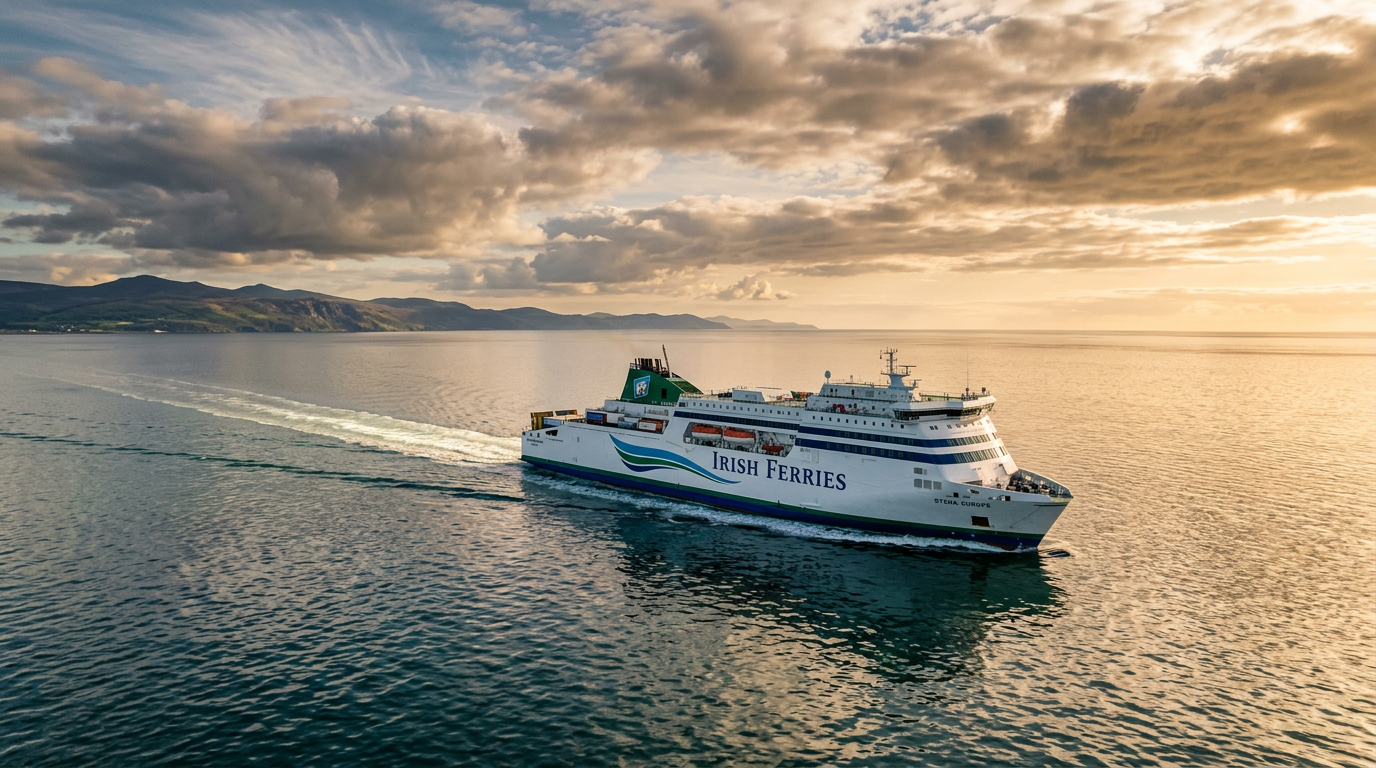
Taking the ferry to Ireland from UK is a popular and practical travel option, with multiple routes available from ports in England, Wales, and Scotland. This allows you to pack your car with everything you need and enjoy a relaxed journey across the Irish Sea.
Key takeaways
- Multiple ferry routes connect the UK to Ireland, with major crossings from Wales, England, and Scotland to Dublin, Rosslare, Belfast, and Larne.
- Key operators include Irish Ferries, Stena Line, and P&O Ferries, each offering different service levels and onboard amenities.
- Ferry prices are influenced by the route, time of year, vehicle type, and how far in advance you book your travel.
- Crossing times vary from around 2 hours on the fastest routes to over 8 hours on longer crossings, depending on the ports.
- Travelling with a car is straightforward and offers great flexibility, while pet travel is widely available but requires pre-booking.
What Are the Main Ferry Routes from the UK to Ireland?
The main ferry routes from the UK to Ireland connect key ports in Great Britain with both the Republic of Ireland and Northern Ireland. These crossings offer a range of durations and onboard experiences, catering to different travel needs. Each route provides a gateway to exploring the island of Ireland at your own pace.
Routes to the Republic of Ireland
For travellers heading to Dublin and the east coast, the most popular route is from Holyhead in North Wales. Sailings from Welsh ports offer convenient access from the Midlands and southern England.
- Holyhead to Dublin: This is the busiest and often fastest route to the Republic of Ireland, operated by both Stena Line and Irish Ferries. It’s a direct link to the heart of the Irish capital.
- Pembroke to Rosslare: Operated by Irish Ferries, this South Wales route is a great option for accessing Ireland’s “Ancient East” and the southern coast.
- Fishguard to Rosslare: Stena Line runs this service from South Wales, providing another convenient entry point to County Wexford and beyond.
Routes to Northern Ireland
Routes to Northern Ireland predominantly depart from Scotland and England, offering direct access to Belfast and Larne.
- Cairnryan to Belfast: Stena Line operates on this very popular and fast route, connecting Scotland directly with the capital of Northern Ireland.
- Cairnryan to Larne: P&O Ferries offers an alternative crossing from Scotland, arriving at the port of Larne, just a short drive from Belfast.
- Liverpool to Belfast: Stena Line runs a longer, often overnight, service from the heart of Liverpool. This is an excellent option for those travelling from the north of England, allowing you to sleep on board and arrive refreshed in the morning.
Which Companies Operate Ferries to Ireland?
The principal companies operating ferries between the UK and Ireland are Stena Line, Irish Ferries, and P&O Ferries. Each operator provides a distinct service with different ships, timetables, and onboard facilities. Choosing the right one depends on your preferred route, budget, and travel style.
- Stena Line: One of the largest operators, Stena Line covers multiple routes including Holyhead to Dublin, Fishguard to Rosslare, Liverpool to Belfast, and Cairnryan to Belfast. Their modern fleet often includes a range of restaurants, kids’ play areas, and comfortable lounges.
- Irish Ferries: A major competitor, Irish Ferries sails the popular Holyhead to Dublin route and the Pembroke to Rosslare route. They operate a mix of conventional ferries and a fastcraft service on the Dublin crossing during certain times of the year.
- P&O Ferries: P&O Ferries focuses on the Cairnryan to Larne and Liverpool to Dublin routes. They are known for their reliable service and comfortable onboard experience.
How Long Does the Ferry to Ireland Take?
The duration of the ferry journey to Ireland ranges from approximately two hours on the fast crossings from Scotland to over eight hours on sailings from England. The crossing time is determined entirely by the departure and arrival ports.
- Cairnryan to Belfast/Larne: Around 2 hours to 2 hours 15 minutes.
- Holyhead to Dublin: Approximately 3 hours 15 minutes.
- Fishguard/Pembroke to Rosslare: Around 3 hours 30 minutes.
- Liverpool to Belfast: Roughly 8 hours.
Longer crossings, such as Liverpool to Belfast, are often scheduled overnight. This allows you to book a cabin, sleep for the majority of the journey, and arrive in the morning ready to start your day.
How Much Does the Ferry to Ireland from the UK Cost?
The cost of a ferry to Ireland from the UK is variable, depending on factors such as the route, season, time of day, vehicle type, and how far in advance you book. Prices are generally highest during school holidays and summer weekends.
To secure the best price, it’s advisable to book as far in advance as possible. Mid-week and off-peak sailings are also typically cheaper. Comparing prices between different operators on the same route can also lead to significant savings. Foot passenger fares are the most affordable, with costs increasing for standard cars, motorhomes, and caravans.
Can I Take My Car on the Ferry to Ireland?
Yes, taking your car on the ferry to Ireland is a primary advantage of this mode of travel. It eliminates the need for car hire and allows you to travel without restrictive luggage allowances, giving you the freedom to explore Ireland’s towns, cities, and countryside at your leisure. The process is very straightforward; you simply drive your car on board and park on the vehicle deck before heading up to the passenger areas.
For those seeking detailed information on one of the most popular crossings for car travel, our Holyhead to Dublin ferry route guide provides an in-depth look at what to expect.
What Are the Passport and ID Requirements?
UK and Irish citizens do not strictly need a passport to travel between the two countries, but ferry companies typically require some form of photographic ID for check-in. This is because of the Common Travel Area (CTA), a long-standing arrangement between the UK, the Crown Dependencies, and Ireland.
While you won’t pass through passport control in the same way as you would at an airport, you will need to prove your identity to the ferry operator. Acceptable forms of photo ID usually include a valid passport or an Irish Passport Card, a driver’s license, or another form of government-issued photographic identification. It is always best to check the specific requirements of the ferry company you are sailing with before you travel.
Are Ferries to Ireland Dog-Friendly?
Yes, most ferry operators on UK to Ireland routes offer dog-friendly travel options. This makes taking a ferry to Ireland from the UK an excellent choice for pet owners. The facilities and rules vary by operator and ship.
Common options include:
- Onboard Kennels: Many ferries provide kennels that you can book in advance. You may be able to visit your dog at specified times during the crossing.
- Pet-Friendly Cabins: A growing number of ships offer a limited number of cabins where your dog can stay with you. These must be booked well in advance.
- Pets in Vehicles: On some routes, you may be required to leave your dog in your car for the duration of the crossing. This is more common on shorter journeys, and operators advise on the suitability of this depending on weather conditions. Always check with the ferry company before booking.
Ferry vs. Flying: Which is Better for a Trip to Ireland?
Choosing between the ferry and flying depends on your priorities; the ferry is ideal for those with a car and lots of luggage, while flying is significantly faster. Consider the pros and cons of each.
Taking the Ferry
- Pros: No luggage limits, travel with your own vehicle, more relaxing journey, often more scenic, cost-effective for families/groups with a car.
- Cons: Much longer journey time, can be affected by weather, fewer departure points.
Flying
- Pros: Very fast journey (around 1 hour), numerous regional airport options, can be cheaper for solo travellers without a car.
- Cons: Strict luggage allowances, need to arrange transport/car hire upon arrival, airport security and waiting times can add stress.
Ultimately, the ferry to Ireland from UK offers a sense of adventure and freedom that flying cannot match, especially for those planning a road trip to explore the beautiful Irish countryside.
Related reading
- Your Complete Guide to Aberdeen to Kirkwall Ferry Prices
- Aberdeen to Kirkwall Ferry Duration: A Complete Guide
Frequently Asked Questions
What is the quickest ferry crossing to Ireland?
The fastest ferry route to Ireland is typically from Cairnryan in Scotland to either Belfast or Larne in Northern Ireland. These crossings are operated by Stena Line and P&O Ferries and take approximately 2 to 2 hours and 15 minutes, making it the shortest sea journey available.
Do I need a passport to get the ferry to Ireland from UK?
Due to the Common Travel Area (CTA), UK and Irish citizens do not need a passport for ferry travel between the two countries. However, all ferry operators require passengers to present a valid form of photographic ID at check-in, such as a driver’s license.
Is it cheaper to fly or get the ferry to Ireland?
It depends. Flying can be cheaper for a single person, but the ferry often works out as more cost-effective for families or groups travelling with a car. Ferry travel removes the cost of car hire and extra baggage fees, making it a better value option for many.
Can you take a dog on the ferry to Ireland?
Yes, all major ferry operators on routes to Ireland allow you to travel with your dog. You will need to book them in advance, and options typically include pet-friendly cabins, onboard kennels, or leaving your pet in your vehicle. Check your operator’s specific policy before booking.
How far in advance should I book a ferry to Ireland?
For the best prices and availability, it is highly recommended to book your ferry several months in advance. This is especially true if you plan to travel during peak times like summer, bank holidays, or if you require specific accommodation like a pet-friendly cabin.
What is the main ferry port in England for Ireland?
The main ferry port in England for direct sailings to Ireland is Liverpool. From here, Stena Line operates a service to Belfast. For access to the Republic of Ireland, the primary departure points are Holyhead, Pembroke, and Fishguard, all of which are located in Wales.
Taking the ferry to Ireland from UK is a popular and practical travel option, with multiple routes available from ports in England, Wales, and Scotland. This allows you to pack your car with everything you need and enjoy a relaxed journey across the Irish Sea.
Key takeaways
- Multiple ferry routes connect the UK to Ireland, with major crossings from Wales, England, and Scotland to Dublin, Rosslare, Belfast, and Larne.
- Key operators include Irish Ferries, Stena Line, and P&O Ferries, each offering different service levels and onboard amenities.
- Ferry prices are influenced by the route, time of year, vehicle type, and how far in advance you book your travel.
- Crossing times vary from around 2 hours on the fastest routes to over 8 hours on longer crossings, depending on the ports.
- Travelling with a car is straightforward and offers great flexibility, while pet travel is widely available but requires pre-booking.
What Are the Main Ferry Routes from the UK to Ireland?
The main ferry routes from the UK to Ireland connect key ports in Great Britain with both the Republic of Ireland and Northern Ireland. These crossings offer a range of durations and onboard experiences, catering to different travel needs. Each route provides a gateway to exploring the island of Ireland at your own pace.
Routes to the Republic of Ireland
For travellers heading to Dublin and the east coast, the most popular route is from Holyhead in North Wales. Sailings from Welsh ports offer convenient access from the Midlands and southern England.
- Holyhead to Dublin: This is the busiest and often fastest route to the Republic of Ireland, operated by both Stena Line and Irish Ferries. It’s a direct link to the heart of the Irish capital.
- Pembroke to Rosslare: Operated by Irish Ferries, this South Wales route is a great option for accessing Ireland’s “Ancient East” and the southern coast.
- Fishguard to Rosslare: Stena Line runs this service from South Wales, providing another convenient entry point to County Wexford and beyond.
Routes to Northern Ireland
Routes to Northern Ireland predominantly depart from Scotland and England, offering direct access to Belfast and Larne.
- Cairnryan to Belfast: Stena Line operates on this very popular and fast route, connecting Scotland directly with the capital of Northern Ireland.
- Cairnryan to Larne: P&O Ferries offers an alternative crossing from Scotland, arriving at the port of Larne, just a short drive from Belfast.
- Liverpool to Belfast: Stena Line runs a longer, often overnight, service from the heart of Liverpool. This is an excellent option for those travelling from the north of England, allowing you to sleep on board and arrive refreshed in the morning.
Which Companies Operate Ferries to Ireland?
The principal companies operating ferries between the UK and Ireland are Stena Line, Irish Ferries, and P&O Ferries. Each operator provides a distinct service with different ships, timetables, and onboard facilities. Choosing the right one depends on your preferred route, budget, and travel style.
- Stena Line: One of the largest operators, Stena Line covers multiple routes including Holyhead to Dublin, Fishguard to Rosslare, Liverpool to Belfast, and Cairnryan to Belfast. Their modern fleet often includes a range of restaurants, kids’ play areas, and comfortable lounges.
- Irish Ferries: A major competitor, Irish Ferries sails the popular Holyhead to Dublin route and the Pembroke to Rosslare route. They operate a mix of conventional ferries and a fastcraft service on the Dublin crossing during certain times of the year.
- P&O Ferries: P&O Ferries focuses on the Cairnryan to Larne and Liverpool to Dublin routes. They are known for their reliable service and comfortable onboard experience.
How Long Does the Ferry to Ireland Take?
The duration of the ferry journey to Ireland ranges from approximately two hours on the fast crossings from Scotland to over eight hours on sailings from England. The crossing time is determined entirely by the departure and arrival ports.
- Cairnryan to Belfast/Larne: Around 2 hours to 2 hours 15 minutes.
- Holyhead to Dublin: Approximately 3 hours 15 minutes.
- Fishguard/Pembroke to Rosslare: Around 3 hours 30 minutes.
- Liverpool to Belfast: Roughly 8 hours.
Longer crossings, such as Liverpool to Belfast, are often scheduled overnight. This allows you to book a cabin, sleep for the majority of the journey, and arrive in the morning ready to start your day.
How Much Does the Ferry to Ireland from the UK Cost?
The cost of a ferry to Ireland from the UK is variable, depending on factors such as the route, season, time of day, vehicle type, and how far in advance you book. Prices are generally highest during school holidays and summer weekends.
To secure the best price, it’s advisable to book as far in advance as possible. Mid-week and off-peak sailings are also typically cheaper. Comparing prices between different operators on the same route can also lead to significant savings. Foot passenger fares are the most affordable, with costs increasing for standard cars, motorhomes, and caravans.
Can I Take My Car on the Ferry to Ireland?
Yes, taking your car on the ferry to Ireland is a primary advantage of this mode of travel. It eliminates the need for car hire and allows you to travel without restrictive luggage allowances, giving you the freedom to explore Ireland’s towns, cities, and countryside at your leisure. The process is very straightforward; you simply drive your car on board and park on the vehicle deck before heading up to the passenger areas.
For those seeking detailed information on one of the most popular crossings for car travel, our Holyhead to Dublin ferry route guide provides an in-depth look at what to expect.
What Are the Passport and ID Requirements?
UK and Irish citizens do not strictly need a passport to travel between the two countries, but ferry companies typically require some form of photographic ID for check-in. This is because of the Common Travel Area (CTA), a long-standing arrangement between the UK, the Crown Dependencies, and Ireland.
While you won’t pass through passport control in the same way as you would at an airport, you will need to prove your identity to the ferry operator. Acceptable forms of photo ID usually include a valid passport or an Irish Passport Card, a driver’s license, or another form of government-issued photographic identification. It is always best to check the specific requirements of the ferry company you are sailing with before you travel.
Are Ferries to Ireland Dog-Friendly?
Yes, most ferry operators on UK to Ireland routes offer dog-friendly travel options. This makes taking a ferry to Ireland from the UK an excellent choice for pet owners. The facilities and rules vary by operator and ship.
Common options include:
- Onboard Kennels: Many ferries provide kennels that you can book in advance. You may be able to visit your dog at specified times during the crossing.
- Pet-Friendly Cabins: A growing number of ships offer a limited number of cabins where your dog can stay with you. These must be booked well in advance.
- Pets in Vehicles: On some routes, you may be required to leave your dog in your car for the duration of the crossing. This is more common on shorter journeys, and operators advise on the suitability of this depending on weather conditions. Always check with the ferry company before booking.
Ferry vs. Flying: Which is Better for a Trip to Ireland?
Choosing between the ferry and flying depends on your priorities; the ferry is ideal for those with a car and lots of luggage, while flying is significantly faster. Consider the pros and cons of each.
Taking the Ferry
- Pros: No luggage limits, travel with your own vehicle, more relaxing journey, often more scenic, cost-effective for families/groups with a car.
- Cons: Much longer journey time, can be affected by weather, fewer departure points.
Flying
- Pros: Very fast journey (around 1 hour), numerous regional airport options, can be cheaper for solo travellers without a car.
- Cons: Strict luggage allowances, need to arrange transport/car hire upon arrival, airport security and waiting times can add stress.
Ultimately, the ferry to Ireland from UK offers a sense of adventure and freedom that flying cannot match, especially for those planning a road trip to explore the beautiful Irish countryside.
Related reading
- Your Complete Guide to Aberdeen to Kirkwall Ferry Prices
- Aberdeen to Kirkwall Ferry Duration: A Complete Guide
Frequently Asked Questions
What is the quickest ferry crossing to Ireland?
The fastest ferry route to Ireland is typically from Cairnryan in Scotland to either Belfast or Larne in Northern Ireland. These crossings are operated by Stena Line and P&O Ferries and take approximately 2 to 2 hours and 15 minutes, making it the shortest sea journey available.
Do I need a passport to get the ferry to Ireland from UK?
Due to the Common Travel Area (CTA), UK and Irish citizens do not need a passport for ferry travel between the two countries. However, all ferry operators require passengers to present a valid form of photographic ID at check-in, such as a driver’s license.
Is it cheaper to fly or get the ferry to Ireland?
It depends. Flying can be cheaper for a single person, but the ferry often works out as more cost-effective for families or groups travelling with a car. Ferry travel removes the cost of car hire and extra baggage fees, making it a better value option for many.
Can you take a dog on the ferry to Ireland?
Yes, all major ferry operators on routes to Ireland allow you to travel with your dog. You will need to book them in advance, and options typically include pet-friendly cabins, onboard kennels, or leaving your pet in your vehicle. Check your operator’s specific policy before booking.
How far in advance should I book a ferry to Ireland?
For the best prices and availability, it is highly recommended to book your ferry several months in advance. This is especially true if you plan to travel during peak times like summer, bank holidays, or if you require specific accommodation like a pet-friendly cabin.
What is the main ferry port in England for Ireland?
The main ferry port in England for direct sailings to Ireland is Liverpool. From here, Stena Line operates a service to Belfast. For access to the Republic of Ireland, the primary departure points are Holyhead, Pembroke, and Fishguard, all of which are located in Wales.