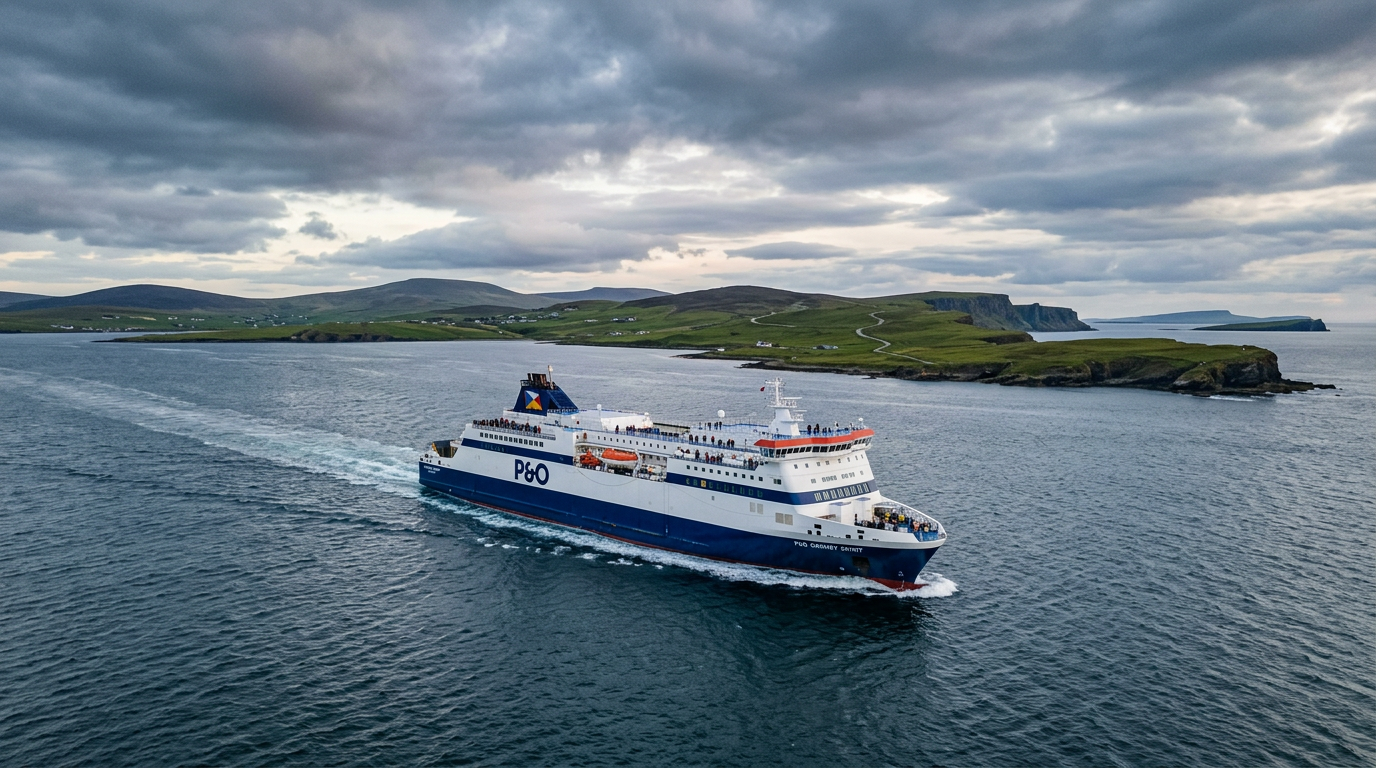
You can take a ferry from Aberdeen to Kirkwall with car, offering a convenient way to bring your vehicle to the Orkney Islands. This direct route is operated exclusively by NorthLink Ferries, with purpose-built vessels designed to handle the North Sea crossing in comfort and safety.
Taking your own car provides the ultimate freedom to explore Orkney’s rich Neolithic history, stunning coastlines, and charming villages at your own pace. This guide covers everything you need to know for a smooth journey.
Key takeaways
- The only direct ferry from Aberdeen to Kirkwall with a car is operated by NorthLink Ferries.
- The crossing takes approximately 6 hours, though this can vary depending on weather and routing.
- Booking well in advance is essential, especially during peak seasons, to secure a space for your vehicle.
- Onboard facilities typically include restaurants, bars, a cinema, and private cabins for comfort.
- You must arrive at the Aberdeen ferry terminal for check-in at least one hour before departure for vehicles.
Which Company Operates the Ferry from Aberdeen to Kirkwall?
The ferry route from Aberdeen to Kirkwall in Orkney is exclusively operated by NorthLink Ferries. They provide the only service for passengers and vehicles on this direct crossing. As the main operator for Scotland’s Northern Isles, NorthLink Ferries runs a modern fleet of roll-on/roll-off (Ro-Ro) vessels that accommodate cars, motorhomes, caravans, and commercial vehicles alongside foot passengers.
The service is a vital lifeline connecting the Scottish mainland with Orkney and Shetland, transporting goods and providing a reliable travel option for tourists and residents alike. The ships are designed for the conditions of the North Sea, prioritising stability and passenger comfort.
How Long is the Ferry Crossing?
The ferry journey from Aberdeen to Kirkwall takes approximately 6 hours. This duration can be influenced by weather conditions and the ship’s specific route, as some sailings may also stop in other ports. It is important to check the specific Aberdeen to Kirkwall ferry duration when you book your ticket.
The crossing is typically an evening or overnight sailing, arriving in Kirkwall in the late evening or early morning. This schedule allows for a full day of travel to Aberdeen and provides the opportunity to rest on board before your Orkney adventure begins. Factors like strong winds or rough seas can occasionally lead to slightly longer journey times.
Preparing Your Car for the Ferry Journey
When taking your car on the ferry, you must arrive for check-in at least one hour prior to departure. Have your booking confirmation (either printed or on a digital device) and a valid photo ID ready to present to port staff. This ensures a smooth and efficient check-in and boarding process.
Before You Board
- Fuel: There is no need to arrive with a near-empty fuel tank; normal fuel levels are permitted.
- Security: You will be directed by staff into designated lanes to await boarding. Follow all crew instructions carefully as you drive onto the vehicle deck.
- Alarms: Deactivate your car alarm to prevent it from being triggered by the ship’s movement during the crossing.
- Access: Once parked on the vehicle deck, you will not be able to return to your car until the ship is ready to disembark. Be sure to take everything you need for the journey, such as overnight bags, snacks, and any necessary medications.
What Onboard Facilities Are Available?
The ferries on this route are equipped with extensive facilities, including restaurants, bars, a cinema, retail shop, lounges, and options for private cabins or reclining seats. These amenities are designed to make your journey comfortable and enjoyable. For a full breakdown of the ship, see our complete guide to the NorthLink Aberdeen to Kirkwall ferry.
Meal options range from formal dining in the restaurant to casual snacks and drinks at the bar. The cinema shows a selection of recent films, providing entertainment during the crossing. For those seeking rest, booking a private cabin is highly recommended. Cabins come in various configurations, from standard twin or four-berth rooms to premium options, all with en-suite facilities. Alternatively, reserved reclining seats are available in a quiet lounge.
Booking Your Ferry from Aberdeen to Kirkwall with a Car
Booking your ferry ticket with a car should be done online and well in advance, especially for travel during peak times like summer holidays, to ensure vehicle space is available. The process is straightforward and requires details about your vehicle type and size.
When booking your ferry from Aberdeen to Kirkwall with car, you will need to specify the length and height of your vehicle, particularly if you have a roof box or are towing a trailer. Pricing is dynamic and often depends on the season, day of the week, and how far in advance you book. To understand the costs involved, it’s useful to consult a guide on Aberdeen to Kirkwall ferry prices. Booking early not only secures your spot but also typically offers the best value.
Arriving at Aberdeen and Kirkwall Ferry Ports
The ferry departs from the NorthLink Terminal at Jamieson’s Quay in Aberdeen and arrives at Hatston Ferry Terminal in Kirkwall, which is located a short drive from the town centre.
Aberdeen Ferry Terminal
Located at AB11 5NP, the Aberdeen terminal is well-signposted from major routes into the city. Vehicle check-in closes one hour before departure. After check-in, you will join a queue of vehicles before being directed onto the ship by the car deck crew. After parking, make your way to the passenger decks.
Kirkwall (Hatston) Ferry Terminal
Upon arrival in Kirkwall, an announcement will be made for drivers to return to the vehicle deck. You will disembark and follow the road from the Hatston terminal, which is about 3 miles (a 5-10 minute drive) from the centre of Kirkwall. The location outside the town centre helps to avoid congestion and gives easy access to the main roads for exploring the rest of the island.
Alternative Ferry Routes to Orkney
Besides the Aberdeen-Kirkwall route, you can reach Orkney with a car via shorter sea crossings. These include the Scrabster to Stromness route (also NorthLink Ferries) and the Gills Bay to St Margaret’s Hope route (Pentland Ferries).
- Scrabster to Stromness: This is NorthLink Ferries’ other car ferry service to Orkney. Departing from Scrabster, near Thurso on the north coast of Scotland, this crossing takes around 90 minutes and docks in the historic town of Stromness. This is a great option if you plan to drive the scenic North Coast 500 route.
- Gills Bay to St Margaret’s Hope: Operated by Pentland Ferries, this is the shortest and quickest sea crossing to Orkney, taking approximately one hour. It departs from Gills Bay, east of Thurso, and arrives at St Margaret’s Hope in South Ronaldsay. This route is often praised for its speed and efficiency.
Choosing the best route depends on your overall travel plans. The ferry from Aberdeen to Kirkwall with car is ideal for those starting from further south, while the shorter crossings are better suited for travellers already in the far north of Scotland.
Frequently Asked Questions
Can you sleep on the Aberdeen to Kirkwall ferry?
Yes, you can sleep on the ferry. NorthLink Ferries offers private cabins that can be booked in advance, ranging from standard inside cabins to more premium outside options. For a more budget-friendly choice, you can also reserve a comfortable reclining seat in a dedicated quiet lounge.
How much does it cost to take a car on the ferry to Orkney?
The cost varies depending on the route, season, and how far in advance you book. The Aberdeen to Kirkwall route is generally more expensive than the shorter crossings from Scrabster or Gills Bay. Prices are highest during summer, so booking early is the best way to secure a lower fare.
Do I need a car to get around Orkney?
While public transport exists, having a car is highly recommended for exploring Orkney fully. Many of the most famous Neolithic sites, such as Skara Brae and the Ring of Brodgar, are located outside the main towns. A car gives you the flexibility to explore these sights at your own pace.
Is the ferry from Aberdeen to Orkney often rough?
The crossing from Aberdeen traverses the North Sea, which can be rough, particularly during the autumn and winter months. The ships are large and built for these conditions, but if you are prone to seasickness, it is wise to take precautions. Summer sailings are generally calmer.
Can I take my dog on the ferry to Orkney?
Yes, you can travel with your dog on the ferry to Orkney. NorthLink Ferries requires pets to be booked in advance. Pets can either remain in your vehicle for the duration of the crossing or travel in one of the onboard kennels, which are also available to book.
How far in advance should I book the Orkney ferry?
It is advisable to book as far in advance as possible, especially if travelling with a vehicle or requiring a cabin. For peak season travel (June to August), booking several months ahead is recommended as vehicle spaces and cabins sell out quickly. Off-season travel offers more flexibility.
You can take a ferry from Aberdeen to Kirkwall with car, offering a convenient way to bring your vehicle to the Orkney Islands. This direct route is operated exclusively by NorthLink Ferries, with purpose-built vessels designed to handle the North Sea crossing in comfort and safety.
Taking your own car provides the ultimate freedom to explore Orkney’s rich Neolithic history, stunning coastlines, and charming villages at your own pace. This guide covers everything you need to know for a smooth journey.
Key takeaways
- The only direct ferry from Aberdeen to Kirkwall with a car is operated by NorthLink Ferries.
- The crossing takes approximately 6 hours, though this can vary depending on weather and routing.
- Booking well in advance is essential, especially during peak seasons, to secure a space for your vehicle.
- Onboard facilities typically include restaurants, bars, a cinema, and private cabins for comfort.
- You must arrive at the Aberdeen ferry terminal for check-in at least one hour before departure for vehicles.
Which Company Operates the Ferry from Aberdeen to Kirkwall?
The ferry route from Aberdeen to Kirkwall in Orkney is exclusively operated by NorthLink Ferries. They provide the only service for passengers and vehicles on this direct crossing. As the main operator for Scotland’s Northern Isles, NorthLink Ferries runs a modern fleet of roll-on/roll-off (Ro-Ro) vessels that accommodate cars, motorhomes, caravans, and commercial vehicles alongside foot passengers.
The service is a vital lifeline connecting the Scottish mainland with Orkney and Shetland, transporting goods and providing a reliable travel option for tourists and residents alike. The ships are designed for the conditions of the North Sea, prioritising stability and passenger comfort.
How Long is the Ferry Crossing?
The ferry journey from Aberdeen to Kirkwall takes approximately 6 hours. This duration can be influenced by weather conditions and the ship’s specific route, as some sailings may also stop in other ports. It is important to check the specific Aberdeen to Kirkwall ferry duration when you book your ticket.
The crossing is typically an evening or overnight sailing, arriving in Kirkwall in the late evening or early morning. This schedule allows for a full day of travel to Aberdeen and provides the opportunity to rest on board before your Orkney adventure begins. Factors like strong winds or rough seas can occasionally lead to slightly longer journey times.
Preparing Your Car for the Ferry Journey
When taking your car on the ferry, you must arrive for check-in at least one hour prior to departure. Have your booking confirmation (either printed or on a digital device) and a valid photo ID ready to present to port staff. This ensures a smooth and efficient check-in and boarding process.
Before You Board
- Fuel: There is no need to arrive with a near-empty fuel tank; normal fuel levels are permitted.
- Security: You will be directed by staff into designated lanes to await boarding. Follow all crew instructions carefully as you drive onto the vehicle deck.
- Alarms: Deactivate your car alarm to prevent it from being triggered by the ship’s movement during the crossing.
- Access: Once parked on the vehicle deck, you will not be able to return to your car until the ship is ready to disembark. Be sure to take everything you need for the journey, such as overnight bags, snacks, and any necessary medications.
What Onboard Facilities Are Available?
The ferries on this route are equipped with extensive facilities, including restaurants, bars, a cinema, retail shop, lounges, and options for private cabins or reclining seats. These amenities are designed to make your journey comfortable and enjoyable. For a full breakdown of the ship, see our complete guide to the NorthLink Aberdeen to Kirkwall ferry.
Meal options range from formal dining in the restaurant to casual snacks and drinks at the bar. The cinema shows a selection of recent films, providing entertainment during the crossing. For those seeking rest, booking a private cabin is highly recommended. Cabins come in various configurations, from standard twin or four-berth rooms to premium options, all with en-suite facilities. Alternatively, reserved reclining seats are available in a quiet lounge.
Booking Your Ferry from Aberdeen to Kirkwall with a Car
Booking your ferry ticket with a car should be done online and well in advance, especially for travel during peak times like summer holidays, to ensure vehicle space is available. The process is straightforward and requires details about your vehicle type and size.
When booking your ferry from Aberdeen to Kirkwall with car, you will need to specify the length and height of your vehicle, particularly if you have a roof box or are towing a trailer. Pricing is dynamic and often depends on the season, day of the week, and how far in advance you book. To understand the costs involved, it’s useful to consult a guide on Aberdeen to Kirkwall ferry prices. Booking early not only secures your spot but also typically offers the best value.
Arriving at Aberdeen and Kirkwall Ferry Ports
The ferry departs from the NorthLink Terminal at Jamieson’s Quay in Aberdeen and arrives at Hatston Ferry Terminal in Kirkwall, which is located a short drive from the town centre.
Aberdeen Ferry Terminal
Located at AB11 5NP, the Aberdeen terminal is well-signposted from major routes into the city. Vehicle check-in closes one hour before departure. After check-in, you will join a queue of vehicles before being directed onto the ship by the car deck crew. After parking, make your way to the passenger decks.
Kirkwall (Hatston) Ferry Terminal
Upon arrival in Kirkwall, an announcement will be made for drivers to return to the vehicle deck. You will disembark and follow the road from the Hatston terminal, which is about 3 miles (a 5-10 minute drive) from the centre of Kirkwall. The location outside the town centre helps to avoid congestion and gives easy access to the main roads for exploring the rest of the island.
Alternative Ferry Routes to Orkney
Besides the Aberdeen-Kirkwall route, you can reach Orkney with a car via shorter sea crossings. These include the Scrabster to Stromness route (also NorthLink Ferries) and the Gills Bay to St Margaret’s Hope route (Pentland Ferries).
- Scrabster to Stromness: This is NorthLink Ferries’ other car ferry service to Orkney. Departing from Scrabster, near Thurso on the north coast of Scotland, this crossing takes around 90 minutes and docks in the historic town of Stromness. This is a great option if you plan to drive the scenic North Coast 500 route.
- Gills Bay to St Margaret’s Hope: Operated by Pentland Ferries, this is the shortest and quickest sea crossing to Orkney, taking approximately one hour. It departs from Gills Bay, east of Thurso, and arrives at St Margaret’s Hope in South Ronaldsay. This route is often praised for its speed and efficiency.
Choosing the best route depends on your overall travel plans. The ferry from Aberdeen to Kirkwall with car is ideal for those starting from further south, while the shorter crossings are better suited for travellers already in the far north of Scotland.
Frequently Asked Questions
Can you sleep on the Aberdeen to Kirkwall ferry?
Yes, you can sleep on the ferry. NorthLink Ferries offers private cabins that can be booked in advance, ranging from standard inside cabins to more premium outside options. For a more budget-friendly choice, you can also reserve a comfortable reclining seat in a dedicated quiet lounge.
How much does it cost to take a car on the ferry to Orkney?
The cost varies depending on the route, season, and how far in advance you book. The Aberdeen to Kirkwall route is generally more expensive than the shorter crossings from Scrabster or Gills Bay. Prices are highest during summer, so booking early is the best way to secure a lower fare.
Do I need a car to get around Orkney?
While public transport exists, having a car is highly recommended for exploring Orkney fully. Many of the most famous Neolithic sites, such as Skara Brae and the Ring of Brodgar, are located outside the main towns. A car gives you the flexibility to explore these sights at your own pace.
Is the ferry from Aberdeen to Orkney often rough?
The crossing from Aberdeen traverses the North Sea, which can be rough, particularly during the autumn and winter months. The ships are large and built for these conditions, but if you are prone to seasickness, it is wise to take precautions. Summer sailings are generally calmer.
Can I take my dog on the ferry to Orkney?
Yes, you can travel with your dog on the ferry to Orkney. NorthLink Ferries requires pets to be booked in advance. Pets can either remain in your vehicle for the duration of the crossing or travel in one of the onboard kennels, which are also available to book.
How far in advance should I book the Orkney ferry?
It is advisable to book as far in advance as possible, especially if travelling with a vehicle or requiring a cabin. For peak season travel (June to August), booking several months ahead is recommended as vehicle spaces and cabins sell out quickly. Off-season travel offers more flexibility.