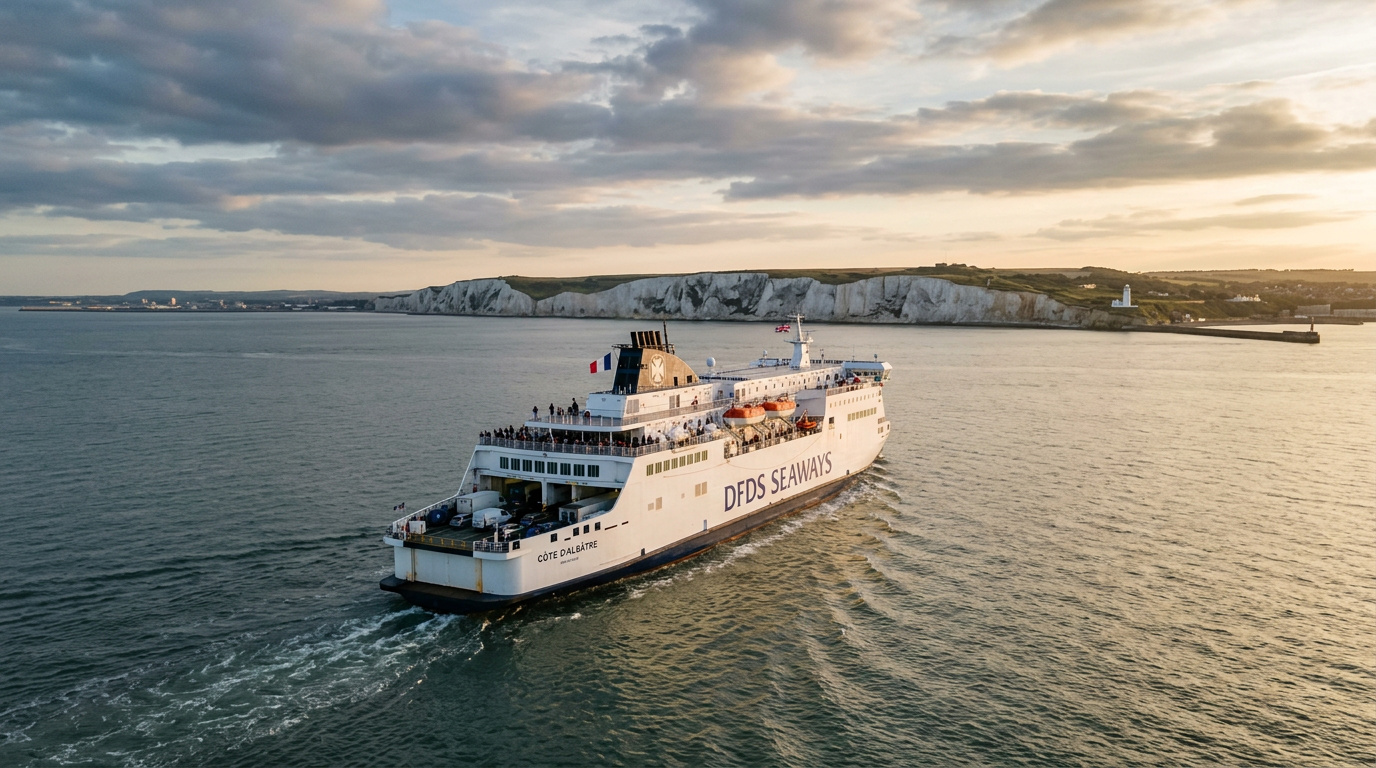
Calais to Dover ferry times are exceptionally frequent, with combined services from multiple operators resulting in departures as often as every 30 to 90 minutes, 24 hours a day. The standard crossing takes approximately 90 minutes, making it a quick and convenient option for travelling from France to the UK.
This guide provides a comprehensive overview of the sailing schedules, operators, and key information you need to plan your journey across the English Channel.
Key takeaways
- Ferries from Calais to Dover run 24/7, with departures as frequent as every 30-90 minutes during peak periods.
- The standard Calais to Dover ferry crossing time is approximately 90 minutes.
- Major operators on this route are P&O Ferries, DFDS Seaways, and Irish Ferries.
- Ferry schedules vary by season, day of the week, and time of day, so always check the latest timetable before travelling.
- It is recommended to arrive at the Port of Calais at least 60-90 minutes before your scheduled departure time.
How Often Do Ferries Sail from Calais to Dover?
Ferries from Calais to Dover operate with high frequency, providing a near-continuous service throughout the day and night. During peak travel times, such as holidays and weekends, you can find a departure every 30 to 90 minutes. This frequent service is possible because three major ferry companies run ships on this route.
The high volume of sailings means travellers have significant flexibility. Whether you plan to cross early in the morning, in the middle of the afternoon, or overnight, you will almost always find a suitable sailing. This makes the route ideal for both planned holidays and more spontaneous trips.
How Long is the Calais to Dover Ferry Crossing?
The ferry crossing from the Port of Calais to the Port of Dover typically takes around 90 minutes. This duration is consistent across the main ferry operators. It represents one of the fastest sea crossings connecting mainland Europe with the UK, contributing to its immense popularity.
While the scheduled time is 90 minutes, the total journey time can be influenced by factors such as weather conditions in the English Channel and vessel traffic. However, operators work efficiently to maintain their schedules, and significant deviations from the 90-minute crossing time are uncommon.
Which Ferry Companies Operate from Calais to Dover?
Three main ferry companies operate the Calais to Dover route. These established operators ensure a competitive and reliable service. Your choice of company may depend on factors like price, specific sailing times, or onboard amenities.
The Operators
- P&O Ferries: One of the most well-known operators, P&O Ferries runs a fleet of modern ships with numerous daily sailings.
- DFDS Seaways: A major European ferry company, DFDS provides a comprehensive schedule of crossings between Calais and Dover.
- Irish Ferries: Having joined the route more recently, Irish Ferries has added further capacity and competition, increasing the number of available sailings for travellers.
All three operators offer services for both vehicle and foot passengers, with a range of onboard facilities including restaurants, cafes, and shops.
How do Ferry Times Vary by Season and Day?
Calais to Dover ferry times are subject to change based on several factors. Timetables are structured to meet fluctuating demand, meaning the schedule you see in August will likely differ from the one in January. It is crucial to check the specific timetable for your intended travel date.
Key influencing factors include:
- Season: Ferry companies operate an enhanced schedule during the peak summer months (roughly June to September) and scale it back during the winter. There may also be adjustments around holidays like Easter and Christmas.
- Day of the Week: Weekend sailings, particularly on Fridays and Sundays, are often more frequent and busier than those on weekdays.
- Time of Day: The highest frequency of sailings is typically found in the morning and evening to cater for day-trippers and overnight travellers. Midday and late-night schedules might be slightly less frequent, though a 24/7 service is maintained.
The dynamic nature of these timetables makes it essential to check the latest calais to dover ferry times before you book and again before you travel.
Checking Live Sailings & Delays
To get the most accurate and up-to-the-minute information, you should always check the live sailing updates provided by your chosen ferry operator. All operators have dedicated sections on their websites and mobile apps for real-time travel information.
These resources will inform you about the status of your specific sailing and provide alerts for any potential delays or cancellations due to weather, technical issues, or port congestion. Checking this information before you set off for the Port of Calais can save you time and help you adjust your travel plans if necessary. It is the most reliable way to get current information on calais to dover ferry times.
What Time Should You Arrive at the Port?
Ferry operators generally advise passengers to arrive at the Port of Calais for check-in at least 60 to 90 minutes before their scheduled departure time. This recommendation applies to passengers travelling with vehicles and as foot passengers. Arriving in good time is vital for a stress-free departure.
The check-in window allows for all necessary pre-boarding procedures, which include ticket verification, French exit checks, and UK border control, which is completed in Calais before you board. During peak periods, these processes can take longer, so allowing extra time is always a sensible precaution.
Calais to Dover Ferry vs. Eurotunnel
The ferry offers a sea-bound journey of around 90 minutes with onboard facilities, while the Eurotunnel Le Shuttle provides a faster vehicle-only crossing of just 35 minutes via an undersea train. The ferry allows you to get out of your car, enjoy a meal, and see the White Cliffs of Dover on approach.
The Eurotunnel is purely a transport service where you remain in your vehicle for the duration of the trip. For those considering the alternative, the Dover to Calais Train: The Channel Tunnel Guide offers a detailed comparison of the two services to help you decide which better suits your needs. While the ferry journey itself is longer, once you factor in loading and unloading from the train, the total time difference may be less significant, and the ferry is often a more cost-effective option. Another popular alternative route is detailed in our guide, which answers the question of How Long is the Dover to Dunkirk Ferry?.
Frequently Asked Questions
How long is the ferry crossing from Calais to Dover?
The standard ferry crossing from Calais to Dover takes approximately 90 minutes. This time is fairly consistent across the main operators, though it can be slightly affected by weather and sea conditions in the English Channel.
How many ferries are there from Calais to Dover each day?
There is a very high number of daily sailings, with P&O Ferries, DFDS, and Irish Ferries combining to offer departures as frequently as every 30 to 90 minutes. This creates a near continuous 24/7 service, ensuring maximum flexibility for travellers.
Do I need a passport for the Calais to Dover ferry?
Yes, a valid passport is required for all passengers travelling on the Calais to Dover ferry. As you are crossing an international border between the EU (France) and the UK, full passport checks are conducted in Calais before you board the ship.
Is it cheaper to book the ferry in advance or pay at the port?
It is almost always cheaper to book your ferry ticket in advance online. Booking ahead gives you access to the best fares and ensures availability, especially for peak travel dates. Paying at the port is usually the most expensive option and risks the sailing being fully booked.
Can I take a dog on the ferry from Calais to Dover?
Yes, you can travel with dogs and other pets on the Calais to Dover ferry. Pets must remain in your vehicle for the duration of the 90-minute crossing. You must have a valid Animal Health Certificate (AHC) or pet passport and ensure your pet is microchipped and vaccinated.
What is the alternative to the Calais-Dover ferry?
The main alternative is the Eurotunnel Le Shuttle, which transports vehicles by train from Calais to Folkestone in about 35 minutes. Other ferry routes from France to the UK include Dover to Dunkirk and Newhaven to Dieppe, though Calais-Dover is the busiest and most frequent.
Calais to Dover ferry times are exceptionally frequent, with combined services from multiple operators resulting in departures as often as every 30 to 90 minutes, 24 hours a day. The standard crossing takes approximately 90 minutes, making it a quick and convenient option for travelling from France to the UK.
This guide provides a comprehensive overview of the sailing schedules, operators, and key information you need to plan your journey across the English Channel.
Key takeaways
- Ferries from Calais to Dover run 24/7, with departures as frequent as every 30-90 minutes during peak periods.
- The standard Calais to Dover ferry crossing time is approximately 90 minutes.
- Major operators on this route are P&O Ferries, DFDS Seaways, and Irish Ferries.
- Ferry schedules vary by season, day of the week, and time of day, so always check the latest timetable before travelling.
- It is recommended to arrive at the Port of Calais at least 60-90 minutes before your scheduled departure time.
How Often Do Ferries Sail from Calais to Dover?
Ferries from Calais to Dover operate with high frequency, providing a near-continuous service throughout the day and night. During peak travel times, such as holidays and weekends, you can find a departure every 30 to 90 minutes. This frequent service is possible because three major ferry companies run ships on this route.
The high volume of sailings means travellers have significant flexibility. Whether you plan to cross early in the morning, in the middle of the afternoon, or overnight, you will almost always find a suitable sailing. This makes the route ideal for both planned holidays and more spontaneous trips.
How Long is the Calais to Dover Ferry Crossing?
The ferry crossing from the Port of Calais to the Port of Dover typically takes around 90 minutes. This duration is consistent across the main ferry operators. It represents one of the fastest sea crossings connecting mainland Europe with the UK, contributing to its immense popularity.
While the scheduled time is 90 minutes, the total journey time can be influenced by factors such as weather conditions in the English Channel and vessel traffic. However, operators work efficiently to maintain their schedules, and significant deviations from the 90-minute crossing time are uncommon.
Which Ferry Companies Operate from Calais to Dover?
Three main ferry companies operate the Calais to Dover route. These established operators ensure a competitive and reliable service. Your choice of company may depend on factors like price, specific sailing times, or onboard amenities.
The Operators
- P&O Ferries: One of the most well-known operators, P&O Ferries runs a fleet of modern ships with numerous daily sailings.
- DFDS Seaways: A major European ferry company, DFDS provides a comprehensive schedule of crossings between Calais and Dover.
- Irish Ferries: Having joined the route more recently, Irish Ferries has added further capacity and competition, increasing the number of available sailings for travellers.
All three operators offer services for both vehicle and foot passengers, with a range of onboard facilities including restaurants, cafes, and shops.
How do Ferry Times Vary by Season and Day?
Calais to Dover ferry times are subject to change based on several factors. Timetables are structured to meet fluctuating demand, meaning the schedule you see in August will likely differ from the one in January. It is crucial to check the specific timetable for your intended travel date.
Key influencing factors include:
- Season: Ferry companies operate an enhanced schedule during the peak summer months (roughly June to September) and scale it back during the winter. There may also be adjustments around holidays like Easter and Christmas.
- Day of the Week: Weekend sailings, particularly on Fridays and Sundays, are often more frequent and busier than those on weekdays.
- Time of Day: The highest frequency of sailings is typically found in the morning and evening to cater for day-trippers and overnight travellers. Midday and late-night schedules might be slightly less frequent, though a 24/7 service is maintained.
The dynamic nature of these timetables makes it essential to check the latest calais to dover ferry times before you book and again before you travel.
Checking Live Sailings & Delays
To get the most accurate and up-to-the-minute information, you should always check the live sailing updates provided by your chosen ferry operator. All operators have dedicated sections on their websites and mobile apps for real-time travel information.
These resources will inform you about the status of your specific sailing and provide alerts for any potential delays or cancellations due to weather, technical issues, or port congestion. Checking this information before you set off for the Port of Calais can save you time and help you adjust your travel plans if necessary. It is the most reliable way to get current information on calais to dover ferry times.
What Time Should You Arrive at the Port?
Ferry operators generally advise passengers to arrive at the Port of Calais for check-in at least 60 to 90 minutes before their scheduled departure time. This recommendation applies to passengers travelling with vehicles and as foot passengers. Arriving in good time is vital for a stress-free departure.
The check-in window allows for all necessary pre-boarding procedures, which include ticket verification, French exit checks, and UK border control, which is completed in Calais before you board. During peak periods, these processes can take longer, so allowing extra time is always a sensible precaution.
Calais to Dover Ferry vs. Eurotunnel
The ferry offers a sea-bound journey of around 90 minutes with onboard facilities, while the Eurotunnel Le Shuttle provides a faster vehicle-only crossing of just 35 minutes via an undersea train. The ferry allows you to get out of your car, enjoy a meal, and see the White Cliffs of Dover on approach.
The Eurotunnel is purely a transport service where you remain in your vehicle for the duration of the trip. For those considering the alternative, the Dover to Calais Train: The Channel Tunnel Guide offers a detailed comparison of the two services to help you decide which better suits your needs. While the ferry journey itself is longer, once you factor in loading and unloading from the train, the total time difference may be less significant, and the ferry is often a more cost-effective option. Another popular alternative route is detailed in our guide, which answers the question of How Long is the Dover to Dunkirk Ferry?.
Frequently Asked Questions
How long is the ferry crossing from Calais to Dover?
The standard ferry crossing from Calais to Dover takes approximately 90 minutes. This time is fairly consistent across the main operators, though it can be slightly affected by weather and sea conditions in the English Channel.
How many ferries are there from Calais to Dover each day?
There is a very high number of daily sailings, with P&O Ferries, DFDS, and Irish Ferries combining to offer departures as frequently as every 30 to 90 minutes. This creates a near continuous 24/7 service, ensuring maximum flexibility for travellers.
Do I need a passport for the Calais to Dover ferry?
Yes, a valid passport is required for all passengers travelling on the Calais to Dover ferry. As you are crossing an international border between the EU (France) and the UK, full passport checks are conducted in Calais before you board the ship.
Is it cheaper to book the ferry in advance or pay at the port?
It is almost always cheaper to book your ferry ticket in advance online. Booking ahead gives you access to the best fares and ensures availability, especially for peak travel dates. Paying at the port is usually the most expensive option and risks the sailing being fully booked.
Can I take a dog on the ferry from Calais to Dover?
Yes, you can travel with dogs and other pets on the Calais to Dover ferry. Pets must remain in your vehicle for the duration of the 90-minute crossing. You must have a valid Animal Health Certificate (AHC) or pet passport and ensure your pet is microchipped and vaccinated.
What is the alternative to the Calais-Dover ferry?
The main alternative is the Eurotunnel Le Shuttle, which transports vehicles by train from Calais to Folkestone in about 35 minutes. Other ferry routes from France to the UK include Dover to Dunkirk and Newhaven to Dieppe, though Calais-Dover is the busiest and most frequent.