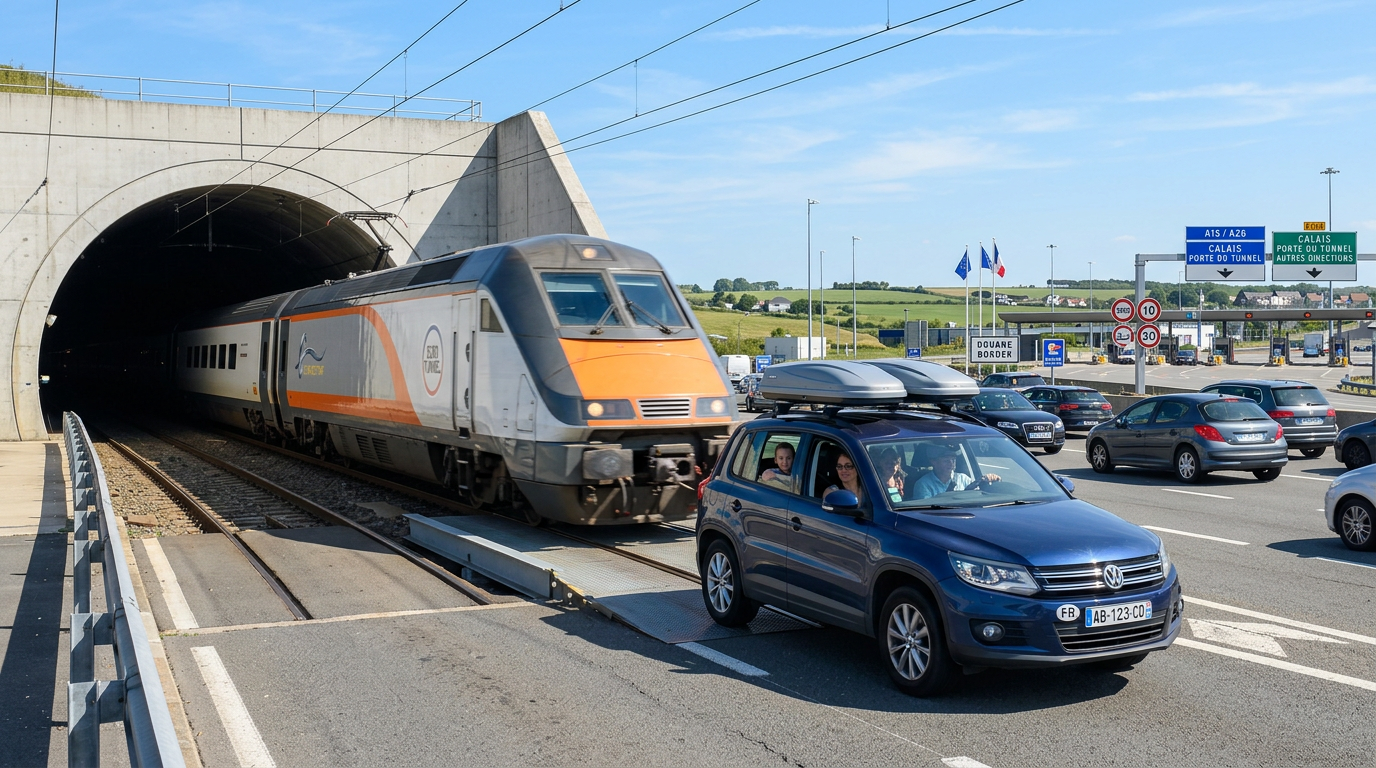
Many travellers looking to cross the English Channel search for a "dover to calais train," envisioning a scenic railway journey across the water. While the idea is appealing, it's a common misconception. The service that transports vehicles and their passengers between the UK and France is actually a car shuttle train service called the Eurotunnel Le Shuttle. This service doesn't depart from Dover but from the nearby town of Folkestone. This guide will explain everything you need to know about using this fast and efficient service, often mistakenly called the dover to calais train, for your next trip to France.
Is There a Dover to Calais Train?
To be precise, no, there isn't a passenger or vehicle train that departs directly from Dover and arrives in Calais. The high-speed passenger train, the Eurostar, departs from London St Pancras International and travels to destinations like Paris, Brussels, and Amsterdam, but it doesn't stop at the coastal towns of Dover or Calais. The service you're likely looking for is the Eurotunnel Le Shuttle, which provides a unique and speedy way to transport your vehicle across the Channel.
The journey on Le Shuttle takes place entirely within the Channel Tunnel, also known as the "Chunnel." You drive your car, van, or motorbike onto a carriage, and for the duration of the short trip, you can relax in your vehicle or stretch your legs within the bright, air-conditioned carriage. The service runs from Folkestone, a town just a short drive from Dover, to Coquelles, a suburb of Calais. So, while you might be searching for a dover to calais train, your actual departure point will be Folkestone.
The Eurotunnel Le Shuttle Experience
The entire Eurotunnel Le Shuttle experience is designed for convenience and speed. The journey from check-in to arrival in France is remarkably smooth.
Before You Board
Your journey begins at the Eurotunnel terminal in Folkestone (postcode CT18 8XX). It's recommended to arrive at least 45 minutes, but no more than two hours, before your booked departure time. The check-in process is largely automated. You can use the self-check-in kiosks by simply inputting your booking reference number. The system uses automatic number plate recognition (ANPR) to make the process even faster. Once you have your boarding pass hanger for your rearview mirror, you'll proceed through UK and French border controls, which are cleverly located on the UK side before you board. This means once you arrive in France, you can drive straight off the train and onto the motorway.
After passing through security and passport control, you can visit the passenger terminal building. Here you'll find shops, cafés, a children's play area, and currency exchange services. It's a good opportunity to grab a coffee or a snack before your journey. For those interested in other cross-channel options, it might be useful to compare this with the ferry experience detailed in our Dover to Dunkirk Ferry Travel Guide.
The Crossing Itself
Boarding is a simple matter of following the green arrows and driving your vehicle onto the designated carriage. The carriages are double-decker for cars and single-decker for larger vehicles like coaches, caravans, and motorhomes. The journey through the Channel Tunnel is a swift 35 minutes. This makes it the fastest way to get your vehicle across the English Channel, significantly quicker than the 90-minute ferry crossing. While there's no scenic view, the efficiency and speed of the dover to calais train—or rather, the Folkestone to Calais shuttle—are its main selling points.
How to Book Your 'Dover to Calais Train' Ticket
Booking your ticket for the Eurotunnel Le Shuttle is a straightforward online process. It's always advisable to book in advance, especially during peak travel times like school holidays and bank holiday weekends, as prices can increase significantly closer to the departure date.
Finding the Best Fares
The official Eurotunnel Le Shuttle website is the primary place to book. Prices are dynamic and vary based on:
- Time of day and day of the week: Midweek and off-peak travel times are generally cheaper.
- Time of year: Summer months and holidays are the most expensive.
- Flexibility: Standard fares are less expensive but come with restrictions on changes. Flexiplus tickets, while more costly, offer the ultimate flexibility, allowing you to travel on any available shuttle on your booked day, access a dedicated check-in lane, and use an exclusive lounge.
There are several ticket types, from day-trip options to short-stay savers and standard long-stay fares. Keep an eye out for special offers and deals, particularly if you can be flexible with your travel dates.
Onboard the Le Shuttle: Facilities and Services
The experience inside the shuttle carriage is unlike any other form of transport. You are either parked in your car for the duration of the journey or are free to walk around the brightly lit and air-conditioned carriage. There are toilet facilities available in every third carriage.
This unique travel method means you have all your belongings with you in your vehicle, which is a significant advantage over flying. There are no restrictions on luggage, though you must declare any alcohol or tobacco exceeding the personal allowance limits. If you're considering different ways to cross the channel, you might be interested in comparing the onboard options with those on a ferry. For example, our guide on Dover to Dunkirk ferry food options can provide insight into the dining experiences offered at sea.
Comparing the Train and Ferry
Choosing between the Eurotunnel and a ferry is a key decision when planning your trip across the Channel. Both have their distinct advantages.
| Feature | Eurotunnel Le Shuttle | Ferry (e.g., Dover to Calais) |
|---|---|---|
| Speed | 35-minute crossing | 90-minute crossing |
| Check-in | Faster, automated process | Can be longer, especially at peak times |
| Experience | Stay with your vehicle, quick and functional | Walk around the ship, access restaurants, shops, and enjoy sea views |
| Cost | Can be more expensive, especially last-minute | Often cheaper, especially with foot passenger options |
| Flexibility | Flexiplus tickets offer great flexibility | Various operators offer frequent crossings, as detailed in our Dover Calais Ferry Times guide |
| Weather | Unaffected by weather conditions | Can be subject to delays or cancellations due to bad weather |
| Sea Sickness | Not a concern | A potential issue for some passengers |
The choice ultimately depends on your priorities. If speed and convenience are paramount, the Eurotunnel Le Shuttle is the clear winner. If you prefer a more leisurely journey with more facilities and are looking for a potentially cheaper option, the ferry might be a better fit.
Travelling with Pets, Vehicles, and Special Luggage
Eurotunnel Le Shuttle is a popular choice for those travelling with pets. For a fee per pet, your furry friend can travel in the comfort of your car with you. You'll need a valid Animal Health Certificate (AHC) or a pet passport issued in an EU country. There are dedicated pet exercise areas at the terminals.
The shuttle can accommodate a wide range of vehicles, from standard cars and motorcycles to motorhomes, caravans, and even coaches. When booking, you will need to specify your vehicle type and whether you have a roof box, as this can affect which carriage you are placed in. Certain goods and vehicle types are restricted, so it's vital to check the Eurotunnel website if you are carrying commercial goods or have an unusual vehicle.
Arriving in Calais: What to Do Next
Upon arrival at the Coquelles terminal, you simply drive off the shuttle and directly onto the French motorway network. The A16 motorway is immediately accessible, linking you to Calais, Dunkirk, and other parts of Northern France, as well as providing easy access to Belgium and the Netherlands. Paris is approximately a three-hour drive away.
The Cité Europe shopping centre is located right next to the terminal and is a popular first stop for many UK travellers looking to stock up on French goods or have a meal before continuing their journey. The city of Calais itself is a short drive away and offers a range of attractions, including its famous lace museum, the iconic town hall, and Rodin's "The Burghers of Calais" statue.
In conclusion, while the search for a dover to calais train might lead you down a confusing path, the actual service—the Eurotunnel Le Shuttle from Folkestone—is a marvel of modern engineering and a fantastic option for a quick and hassle-free crossing to France. It offers unparalleled speed and convenience, getting you and your vehicle to the continent in just 35 minutes, ready to start your European adventure.
Frequently Asked Questions
Can you take a train from Dover to Calais?
No, there is no direct train service from Dover to Calais. The vehicle shuttle train, Eurotunnel Le Shuttle, departs from nearby Folkestone and arrives in Calais.
How long is the Dover to Calais train?
The journey on the Eurotunnel Le Shuttle from Folkestone to Calais is very quick, with a crossing time of just 35 minutes.
Do you stay in your car on the Dover to Calais train?
Yes, on the Eurotunnel Le Shuttle, you remain in your vehicle for the duration of the 35-minute journey through the Channel Tunnel.
What is the difference between Eurostar and Eurotunnel?
Eurotunnel Le Shuttle is a vehicle-carrying train that runs between Folkestone and Calais. Eurostar is a high-speed passenger-only train that connects London with cities like Paris and Brussels.
Is the Eurotunnel cheaper than the ferry?
The ferry is often cheaper than the Eurotunnel, especially if booked in advance or for foot passengers. However, prices vary, and Eurotunnel can sometimes be competitive, especially when considering its speed and convenience.
How far is the Eurotunnel terminal from Dover?
The Eurotunnel terminal in Folkestone is approximately a 15-20 minute drive from the Dover ferry port, depending on traffic.
Many travellers looking to cross the English Channel search for a "dover to calais train," envisioning a scenic railway journey across the water. While the idea is appealing, it's a common misconception. The service that transports vehicles and their passengers between the UK and France is actually a car shuttle train service called the Eurotunnel Le Shuttle. This service doesn't depart from Dover but from the nearby town of Folkestone. This guide will explain everything you need to know about using this fast and efficient service, often mistakenly called the dover to calais train, for your next trip to France.
Is There a Dover to Calais Train?
To be precise, no, there isn't a passenger or vehicle train that departs directly from Dover and arrives in Calais. The high-speed passenger train, the Eurostar, departs from London St Pancras International and travels to destinations like Paris, Brussels, and Amsterdam, but it doesn't stop at the coastal towns of Dover or Calais. The service you're likely looking for is the Eurotunnel Le Shuttle, which provides a unique and speedy way to transport your vehicle across the Channel.
The journey on Le Shuttle takes place entirely within the Channel Tunnel, also known as the "Chunnel." You drive your car, van, or motorbike onto a carriage, and for the duration of the short trip, you can relax in your vehicle or stretch your legs within the bright, air-conditioned carriage. The service runs from Folkestone, a town just a short drive from Dover, to Coquelles, a suburb of Calais. So, while you might be searching for a dover to calais train, your actual departure point will be Folkestone.
The Eurotunnel Le Shuttle Experience
The entire Eurotunnel Le Shuttle experience is designed for convenience and speed. The journey from check-in to arrival in France is remarkably smooth.
Before You Board
Your journey begins at the Eurotunnel terminal in Folkestone (postcode CT18 8XX). It's recommended to arrive at least 45 minutes, but no more than two hours, before your booked departure time. The check-in process is largely automated. You can use the self-check-in kiosks by simply inputting your booking reference number. The system uses automatic number plate recognition (ANPR) to make the process even faster. Once you have your boarding pass hanger for your rearview mirror, you'll proceed through UK and French border controls, which are cleverly located on the UK side before you board. This means once you arrive in France, you can drive straight off the train and onto the motorway.
After passing through security and passport control, you can visit the passenger terminal building. Here you'll find shops, cafés, a children's play area, and currency exchange services. It's a good opportunity to grab a coffee or a snack before your journey. For those interested in other cross-channel options, it might be useful to compare this with the ferry experience detailed in our Dover to Dunkirk Ferry Travel Guide.
The Crossing Itself
Boarding is a simple matter of following the green arrows and driving your vehicle onto the designated carriage. The carriages are double-decker for cars and single-decker for larger vehicles like coaches, caravans, and motorhomes. The journey through the Channel Tunnel is a swift 35 minutes. This makes it the fastest way to get your vehicle across the English Channel, significantly quicker than the 90-minute ferry crossing. While there's no scenic view, the efficiency and speed of the dover to calais train—or rather, the Folkestone to Calais shuttle—are its main selling points.
How to Book Your 'Dover to Calais Train' Ticket
Booking your ticket for the Eurotunnel Le Shuttle is a straightforward online process. It's always advisable to book in advance, especially during peak travel times like school holidays and bank holiday weekends, as prices can increase significantly closer to the departure date.
Finding the Best Fares
The official Eurotunnel Le Shuttle website is the primary place to book. Prices are dynamic and vary based on:
- Time of day and day of the week: Midweek and off-peak travel times are generally cheaper.
- Time of year: Summer months and holidays are the most expensive.
- Flexibility: Standard fares are less expensive but come with restrictions on changes. Flexiplus tickets, while more costly, offer the ultimate flexibility, allowing you to travel on any available shuttle on your booked day, access a dedicated check-in lane, and use an exclusive lounge.
There are several ticket types, from day-trip options to short-stay savers and standard long-stay fares. Keep an eye out for special offers and deals, particularly if you can be flexible with your travel dates.
Onboard the Le Shuttle: Facilities and Services
The experience inside the shuttle carriage is unlike any other form of transport. You are either parked in your car for the duration of the journey or are free to walk around the brightly lit and air-conditioned carriage. There are toilet facilities available in every third carriage.
This unique travel method means you have all your belongings with you in your vehicle, which is a significant advantage over flying. There are no restrictions on luggage, though you must declare any alcohol or tobacco exceeding the personal allowance limits. If you're considering different ways to cross the channel, you might be interested in comparing the onboard options with those on a ferry. For example, our guide on Dover to Dunkirk ferry food options can provide insight into the dining experiences offered at sea.
Comparing the Train and Ferry
Choosing between the Eurotunnel and a ferry is a key decision when planning your trip across the Channel. Both have their distinct advantages.
| Feature | Eurotunnel Le Shuttle | Ferry (e.g., Dover to Calais) |
|---|---|---|
| Speed | 35-minute crossing | 90-minute crossing |
| Check-in | Faster, automated process | Can be longer, especially at peak times |
| Experience | Stay with your vehicle, quick and functional | Walk around the ship, access restaurants, shops, and enjoy sea views |
| Cost | Can be more expensive, especially last-minute | Often cheaper, especially with foot passenger options |
| Flexibility | Flexiplus tickets offer great flexibility | Various operators offer frequent crossings, as detailed in our Dover Calais Ferry Times guide |
| Weather | Unaffected by weather conditions | Can be subject to delays or cancellations due to bad weather |
| Sea Sickness | Not a concern | A potential issue for some passengers |
The choice ultimately depends on your priorities. If speed and convenience are paramount, the Eurotunnel Le Shuttle is the clear winner. If you prefer a more leisurely journey with more facilities and are looking for a potentially cheaper option, the ferry might be a better fit.
Travelling with Pets, Vehicles, and Special Luggage
Eurotunnel Le Shuttle is a popular choice for those travelling with pets. For a fee per pet, your furry friend can travel in the comfort of your car with you. You'll need a valid Animal Health Certificate (AHC) or a pet passport issued in an EU country. There are dedicated pet exercise areas at the terminals.
The shuttle can accommodate a wide range of vehicles, from standard cars and motorcycles to motorhomes, caravans, and even coaches. When booking, you will need to specify your vehicle type and whether you have a roof box, as this can affect which carriage you are placed in. Certain goods and vehicle types are restricted, so it's vital to check the Eurotunnel website if you are carrying commercial goods or have an unusual vehicle.
Arriving in Calais: What to Do Next
Upon arrival at the Coquelles terminal, you simply drive off the shuttle and directly onto the French motorway network. The A16 motorway is immediately accessible, linking you to Calais, Dunkirk, and other parts of Northern France, as well as providing easy access to Belgium and the Netherlands. Paris is approximately a three-hour drive away.
The Cité Europe shopping centre is located right next to the terminal and is a popular first stop for many UK travellers looking to stock up on French goods or have a meal before continuing their journey. The city of Calais itself is a short drive away and offers a range of attractions, including its famous lace museum, the iconic town hall, and Rodin's "The Burghers of Calais" statue.
In conclusion, while the search for a dover to calais train might lead you down a confusing path, the actual service—the Eurotunnel Le Shuttle from Folkestone—is a marvel of modern engineering and a fantastic option for a quick and hassle-free crossing to France. It offers unparalleled speed and convenience, getting you and your vehicle to the continent in just 35 minutes, ready to start your European adventure.
Frequently Asked Questions
Can you take a train from Dover to Calais?
No, there is no direct train service from Dover to Calais. The vehicle shuttle train, Eurotunnel Le Shuttle, departs from nearby Folkestone and arrives in Calais.
How long is the Dover to Calais train?
The journey on the Eurotunnel Le Shuttle from Folkestone to Calais is very quick, with a crossing time of just 35 minutes.
Do you stay in your car on the Dover to Calais train?
Yes, on the Eurotunnel Le Shuttle, you remain in your vehicle for the duration of the 35-minute journey through the Channel Tunnel.
What is the difference between Eurostar and Eurotunnel?
Eurotunnel Le Shuttle is a vehicle-carrying train that runs between Folkestone and Calais. Eurostar is a high-speed passenger-only train that connects London with cities like Paris and Brussels.
Is the Eurotunnel cheaper than the ferry?
The ferry is often cheaper than the Eurotunnel, especially if booked in advance or for foot passengers. However, prices vary, and Eurotunnel can sometimes be competitive, especially when considering its speed and convenience.
How far is the Eurotunnel terminal from Dover?
The Eurotunnel terminal in Folkestone is approximately a 15-20 minute drive from the Dover ferry port, depending on traffic.